Farrow & Ball Ammonite vs. Farrow & Ball Skimming Stone
This page compares Ammonite and Skimming Stone by Farrow & Ball using side-by-side technical data, undertones, light reflectance, and real-world usage. Select different shades below to compare other paint colors across major brands.
Farrow & Ball
Ammonite
No. 274
Farrow & Ball
Skimming Stone
No. 241
HuePosition on the color wheel (0-360°). Determines the base color family.
47
more yellow39
more orangeSaturationHow vivid or muted the color appears (0-100%). Lower values are more gray.
10
less saturated19
more saturatedLightnessHow light or dark the color is in HSL space (0-100%).
83
83
LRVLight Reflectance Value. How much light a color reflects (0-100). Higher means brighter in a room.
83.9%
83.7%
CIE L*Perceptual lightness from CIE Lab color space (0-100). More closely matches human brightness perception.
85.6
85.5
TemperatureWhether the color leans warm (reds, yellows) or cool (blues, greens) based on hue and saturation.
Neutral
Warm
ΔE*₀₀CIEDE2000 color difference. <1 imperceptible; 1-2 barely noticeable; 2-5 noticeable; 5-10 clear; >10 very different.
2.28
How to read this comparison
Delta E measures how far two colors sit apart to the eye. Under 2, most people can't tell them apart on a wall. Over 5, they read as clearly different colors. LRV tells you how much light a color reflects. In weak light, an LRV gap usually changes the room more than a small hue shift.
Real Photos

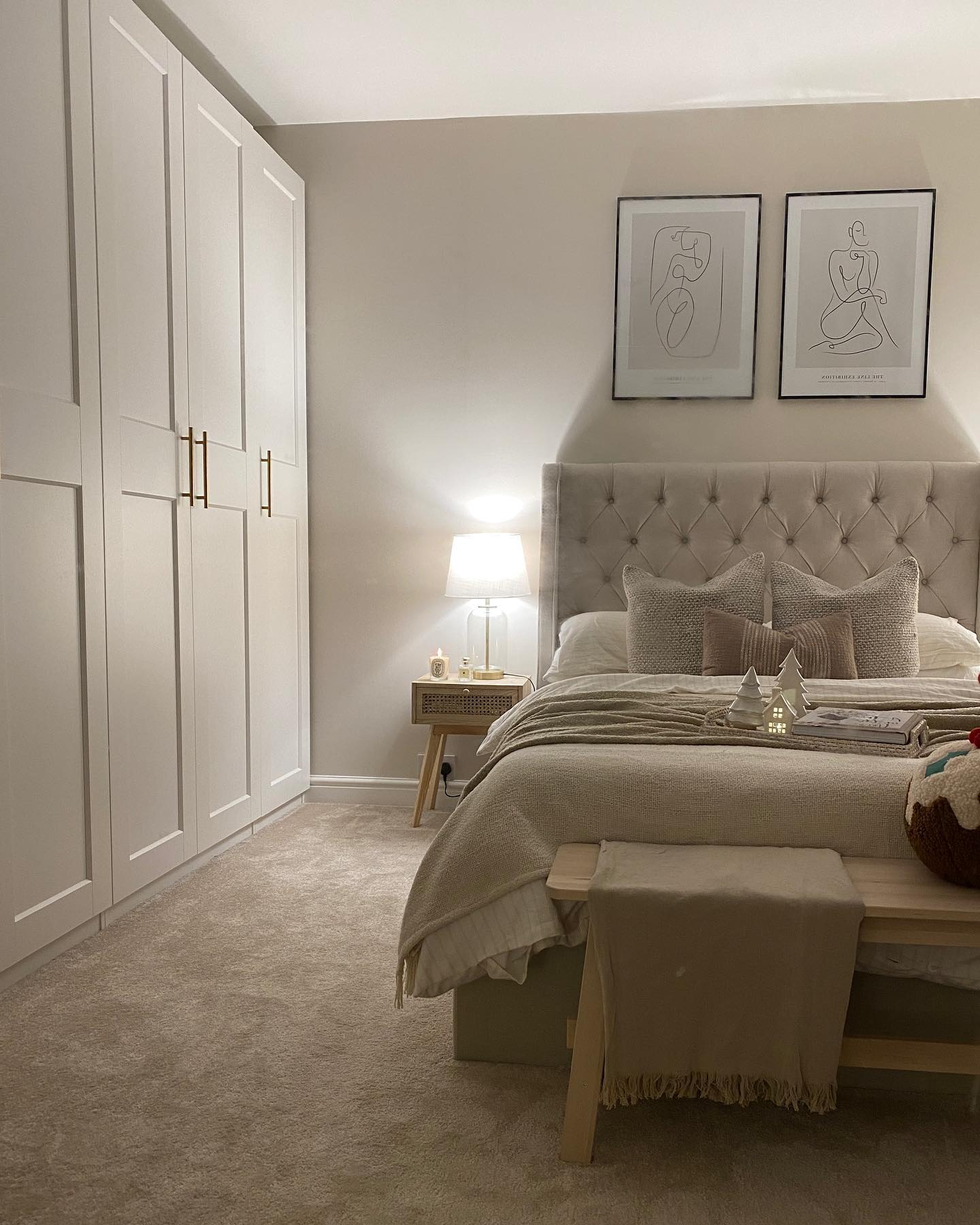
Colors may appear differently depending on screen calibration, lighting conditions, and surrounding materials. For the most accurate evaluation, always test paint samples directly in your space before making a final decision.
Explore Complementary Color Palettes
Color Palettes for Ammonite
Darker Shades
Monochromatic dark
Lighter Shades
Monochromatic light
Complementary
Opposite on color wheel
Analogous
Adjacent colors
Color Palettes for Skimming Stone
Darker Shades
Monochromatic dark
Lighter Shades
Monochromatic light
Complementary
Opposite on color wheel
Analogous
Adjacent colors