What Color Should You Paint Your Garage? (Guide & Best Colors)
The best garage paint color is the one that works with your house, reflects enough light for the way you use the space, and can handle years of moisture, road salt, dust, and hot tires.
For most homes, that means a light to mid-tone neutral on the walls, a garage door color tied to the exterior, and a floor color that hides tire marks instead of showing every footprint.
I'll walk through garage colors for walls, doors, cabinets, and floors, with the practical catches I look for on real projects before anyone buys five gallons of paint.
Why Garage Color Matters

Your garage color can affect your home's value. When I was selling my first house, my realtor pointed out that a clean, well-matched garage paint color can boost perceived property value by 1% to 4%. That only happens when the color looks intentional from the street, not like a leftover can from another room.
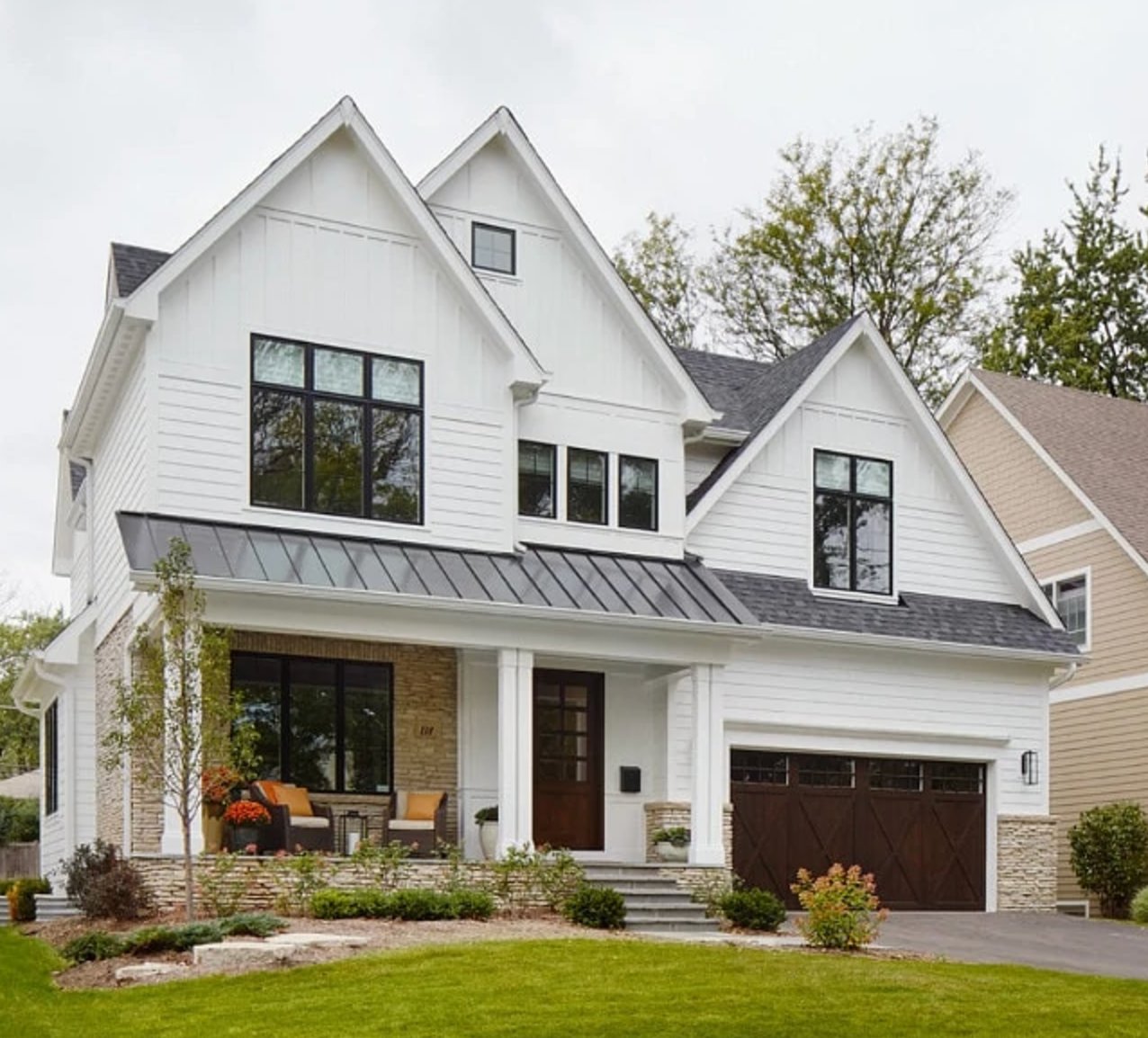
The temperature factor is a big deal, especially in the South, where dark paint absorbs heat and can make an already warm garage harder to use.
Dark colors can turn a garage into a sauna in July. Light colors reflect more heat and make the room feel larger, which matters in a one-car garage or any space without good cross ventilation.
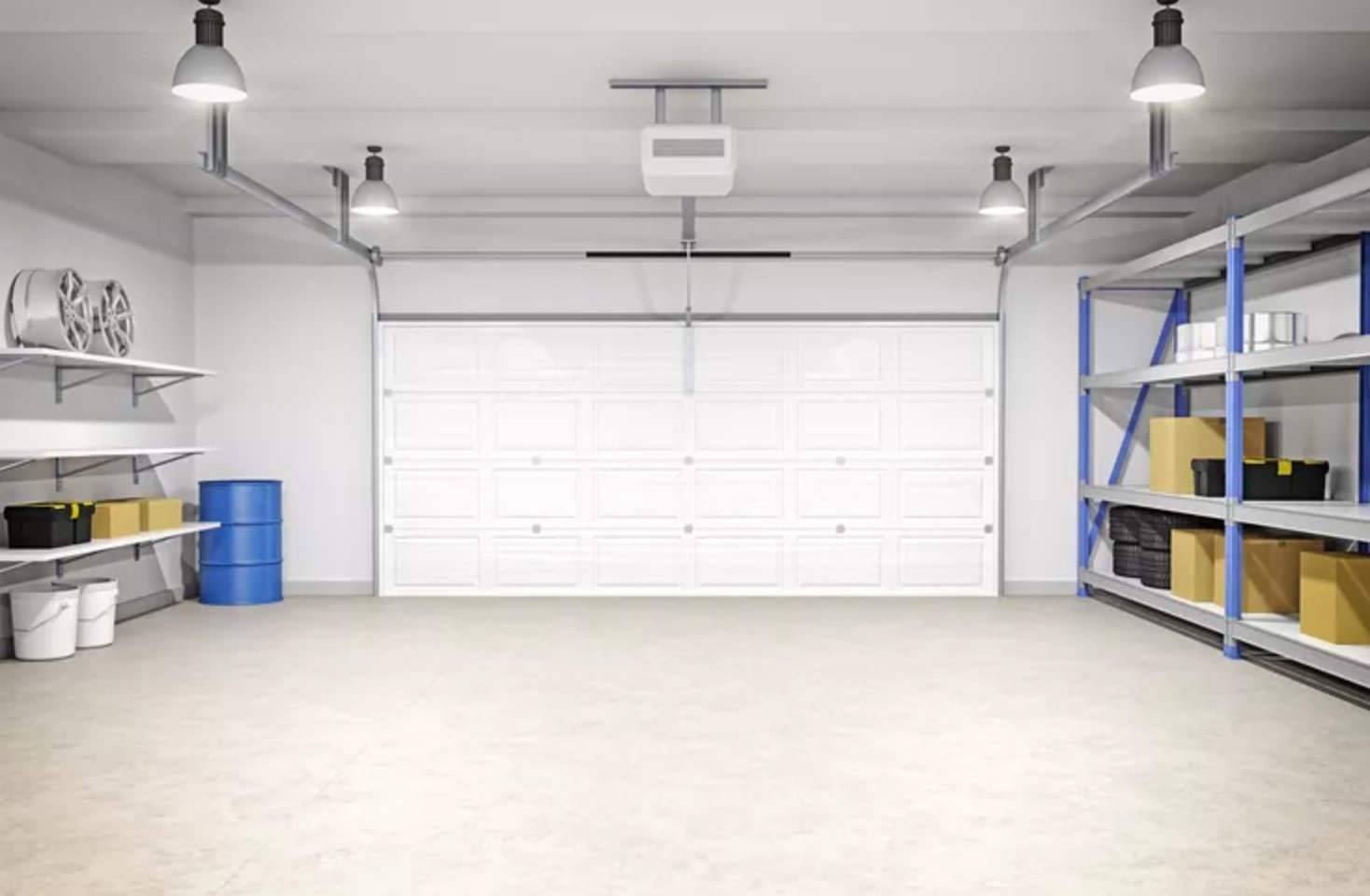
Lighting and usability go hand in hand with color choice. Light-colored walls bounce more light, so you may not need as many high-output fixtures. They also make it easier to see oil leaks, water stains, and dropped screws before they become a bigger problem.
Paint durability matters because garage walls take a bigger beating than bedroom walls. Temperature swings, humidity, car exhaust, bikes, ladders, and storage bins all punish the finish.
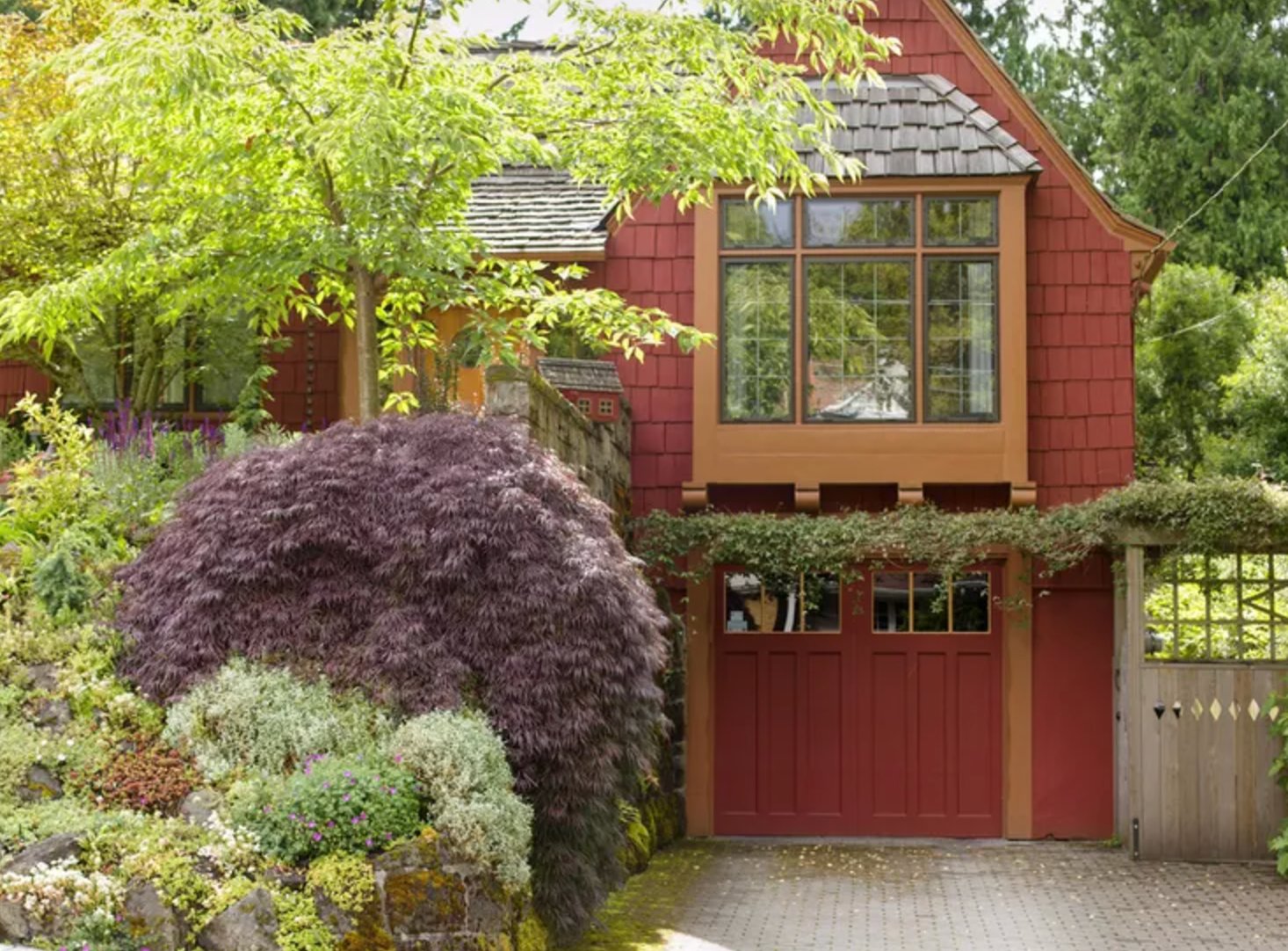
Match your home's exterior. A garage door or visible garage wall that fights the siding, trim, roof, or brick will pull attention for the wrong reason, even if the landscaping is beautiful.
What Color Should You Paint Your Garage Walls?
For garage walls, start with three questions: how you'll use the space, how much natural light it gets, and how often you're willing to clean scuffs.


If you're using the garage as a workshop, a medium gray like Sherwin-Williams Repose Gray or Benjamin Moore Coventry Gray is usually the most forgiving choice. These shades reduce glare when you're working under task lights and hide sawdust, drywall dust, and small wall dings better than white.
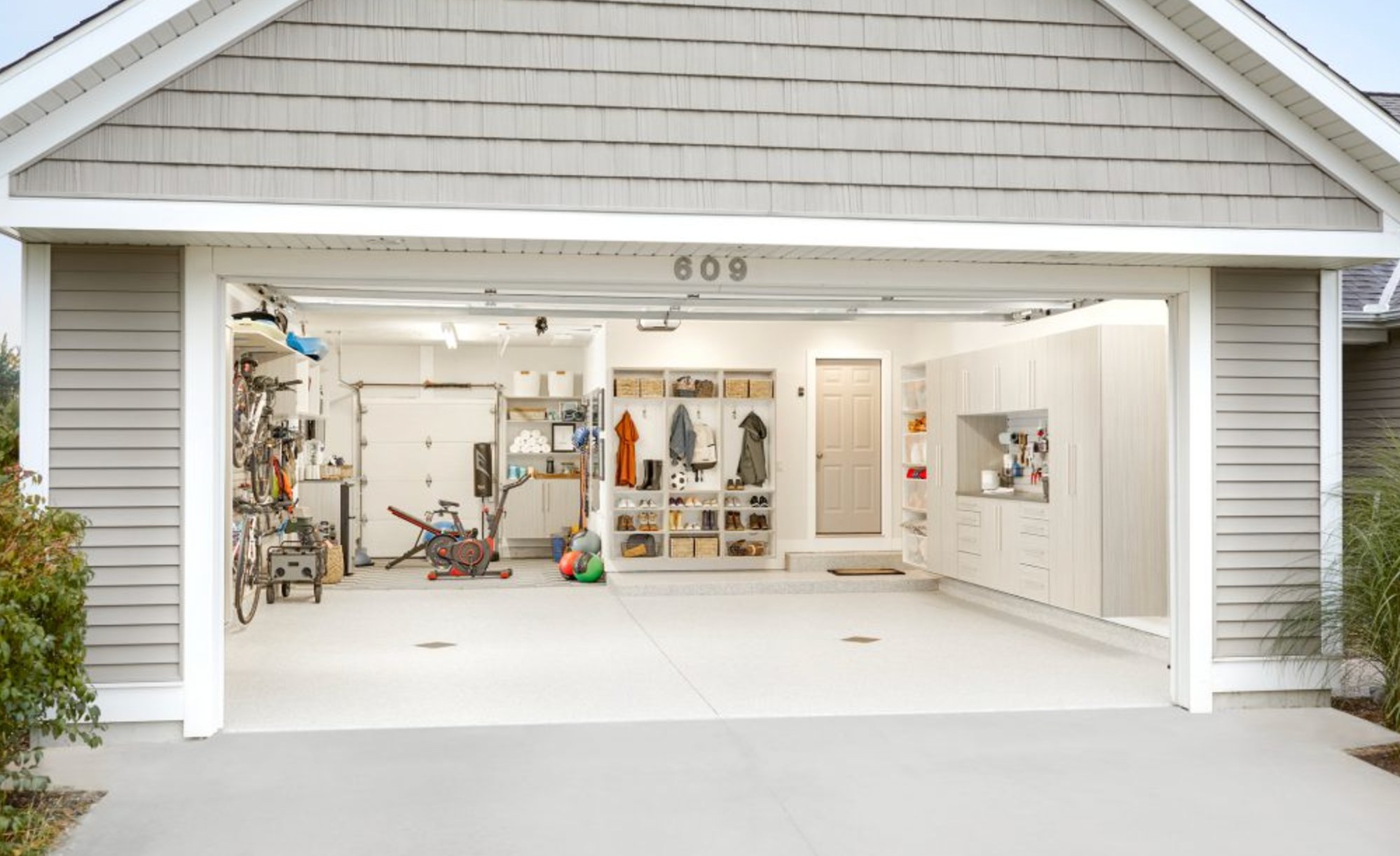
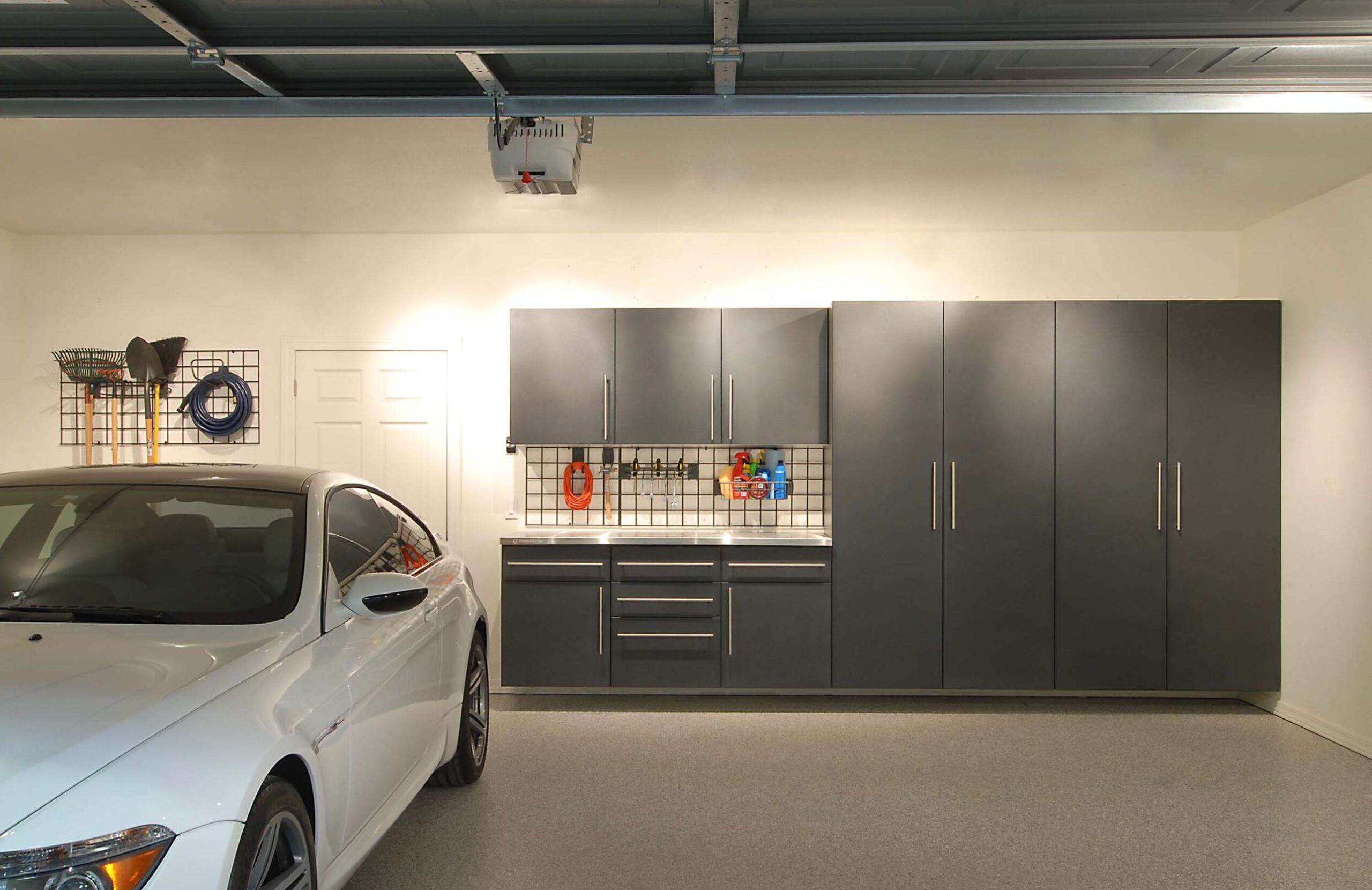
If the garage is mainly for storage, warm beige colors like Sherwin-Williams Accessible Beige or Benjamin Moore Manchester Tan are easier to live with than stark white. They soften concrete, plywood shelves, and cardboard boxes while hiding the smudges that happen around bins and lawn equipment.
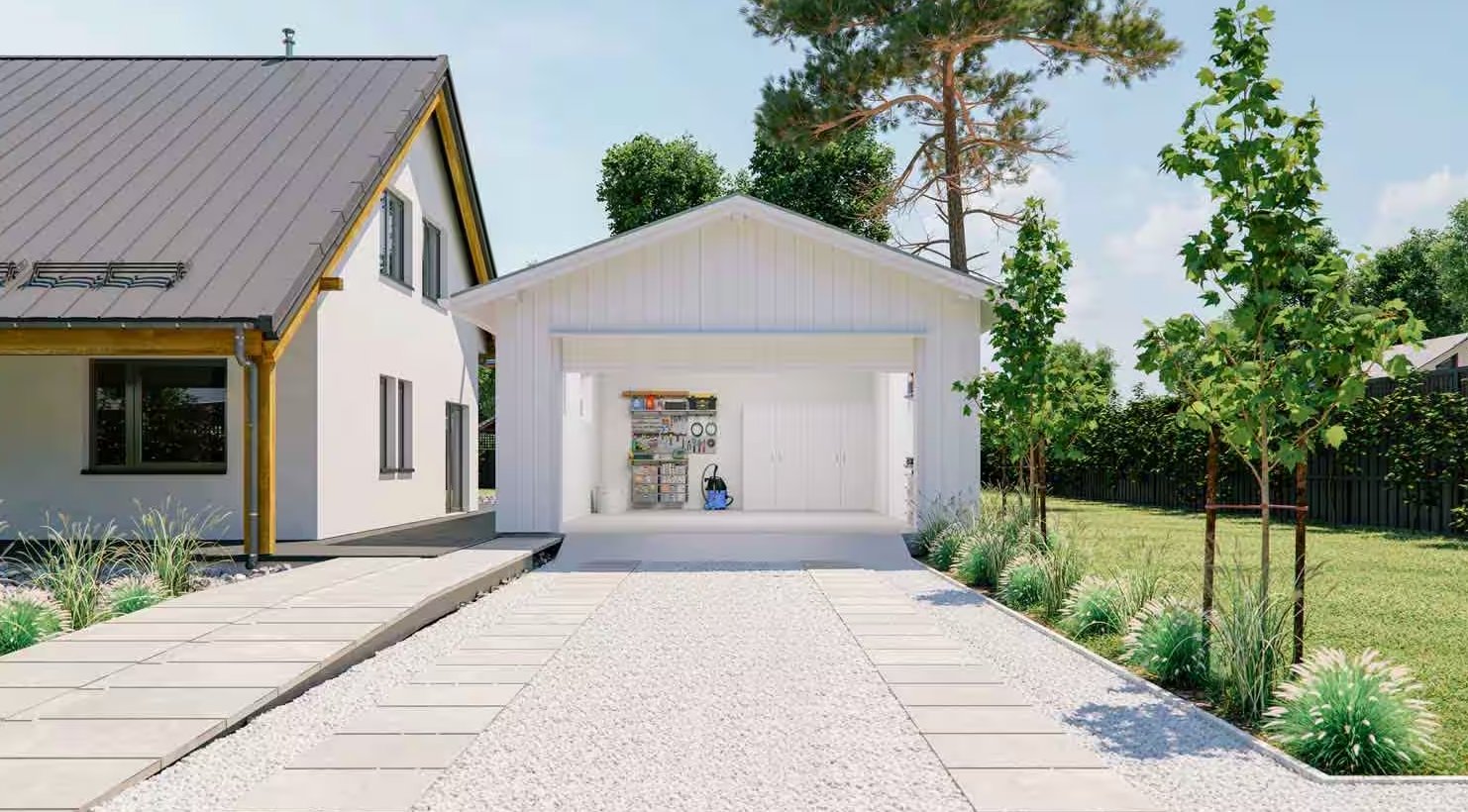

For dark garages with limited windows, light colors make the space feel bigger and safer to move through. Consider Sherwin-Williams Pure White or Benjamin Moore Chantilly Lace if you need maximum brightness.
White walls show every speck of dirt. If you choose white, use a satin or semi-gloss finish so fingerprints and muddy splashes wipe off without burnishing the paint.
Key things to remember:
- If you clean the walls often, look for a scrubbable paint with antibacterial properties
- For humid garages or homes near the coast, choose mold-resistant paint
- Use primer on bare drywall, patched areas, stains, or chalky old paint so the finish wears evenly
- Factor in temperature swings because repeated expansion and contraction can make weak paint crack over time
Whatever color you pick, use paint that can handle occasional oil and solvent exposure. Check the VOC (volatile organic compounds) level if the garage has poor ventilation. If the walls or floor need maximum durability, compare paint against an epoxy coating before you commit.
What's the Best Color for Garage Doors?
Your garage door color matters because the door can take up a third of your home's front view. If it is too bright, too dark, or unrelated to the exterior palette, it becomes the first thing people see.
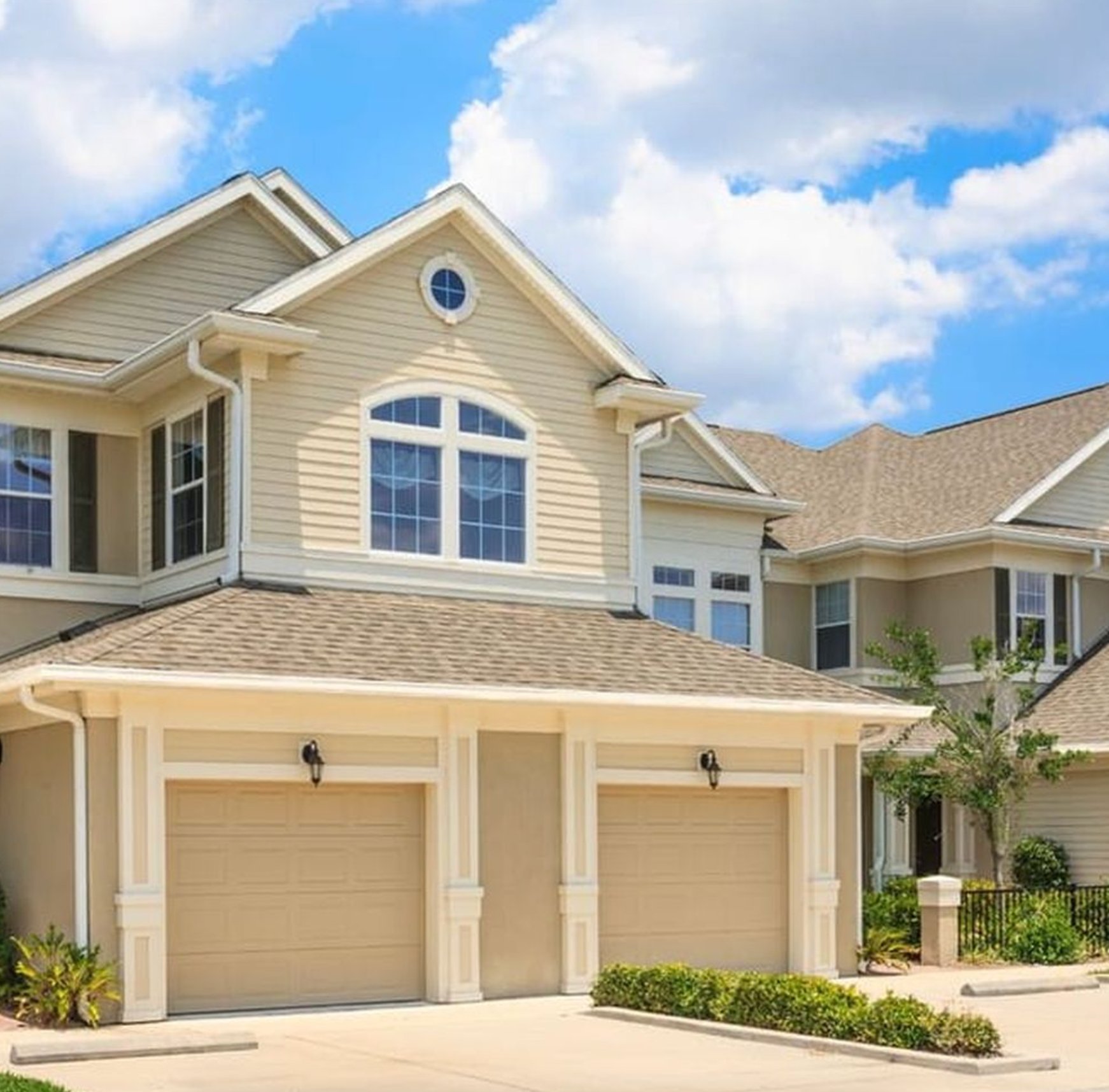
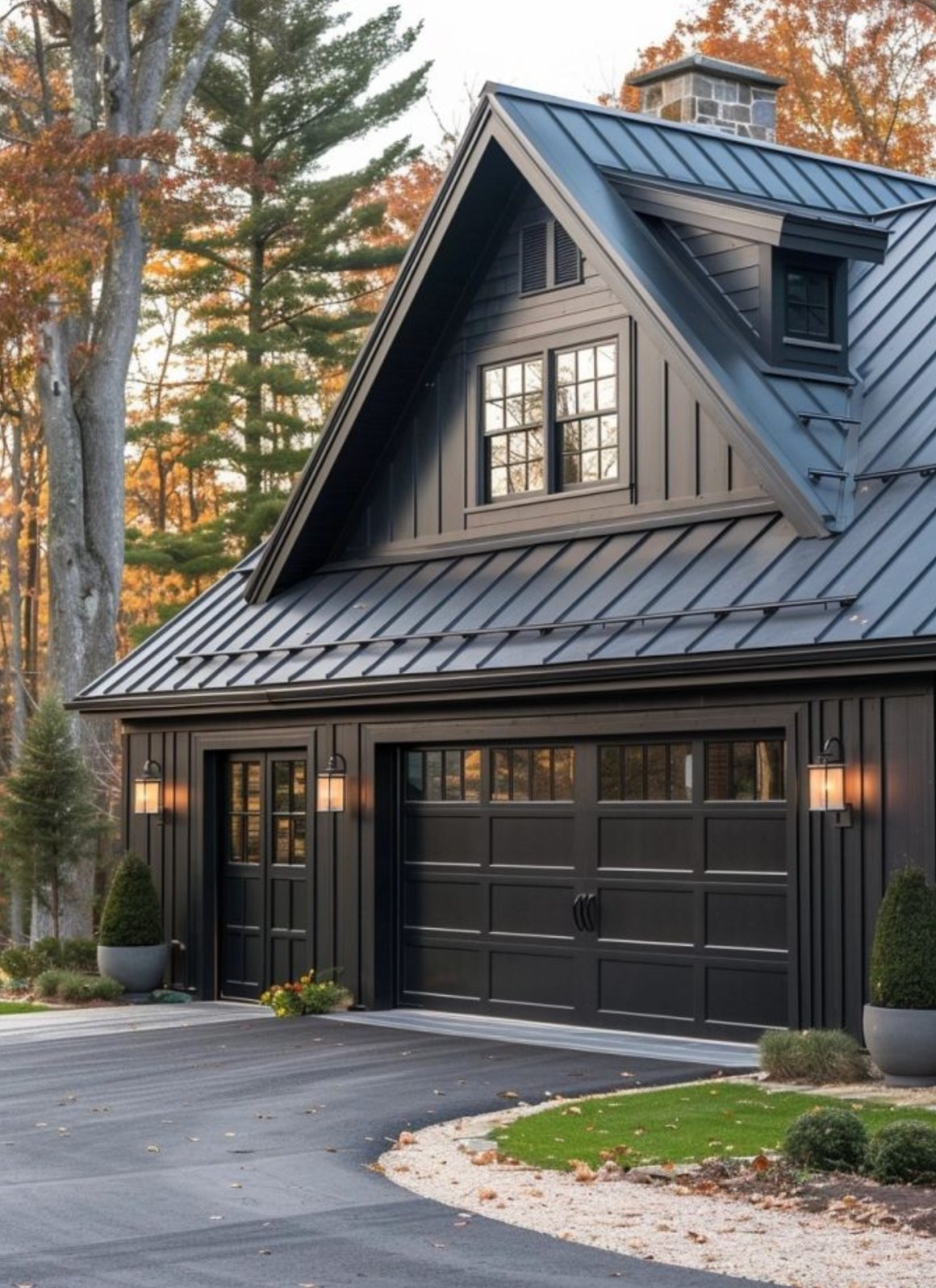
First, read the home's fixed colors. Beige siding, tan stone, cream trim, and a brown roof point warm. Gray stone, white trim, black windows, and a charcoal roof point cool.
That temperature read should narrow your choices before you open a fan deck.

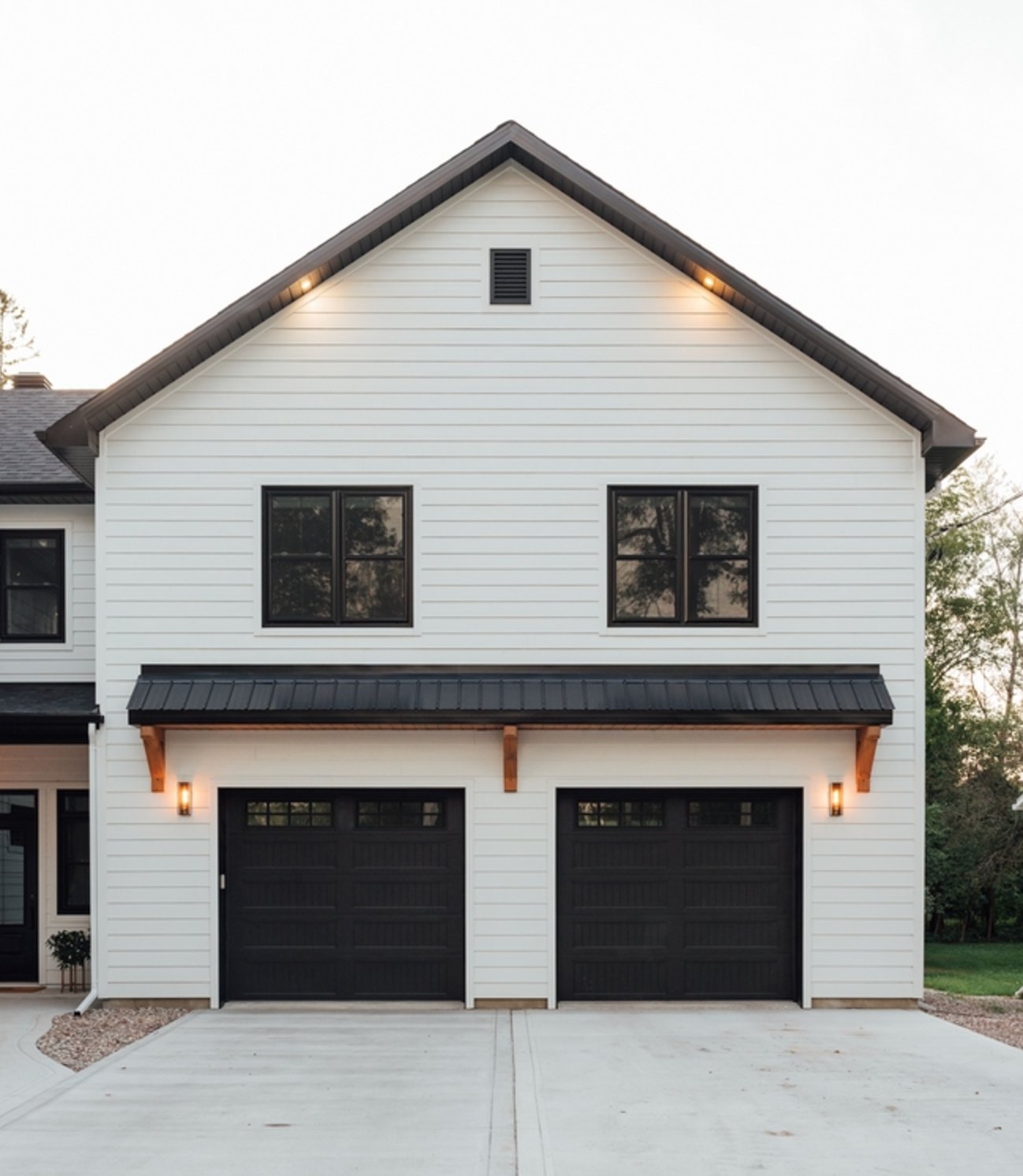
There are three reliable approaches. The quietest is monochromatic, using the house color in a slightly lighter or darker value.
You can also create contrast, such as graphite doors on a white house. The third option is a neutral color that bridges warm and cool tones on the facade.
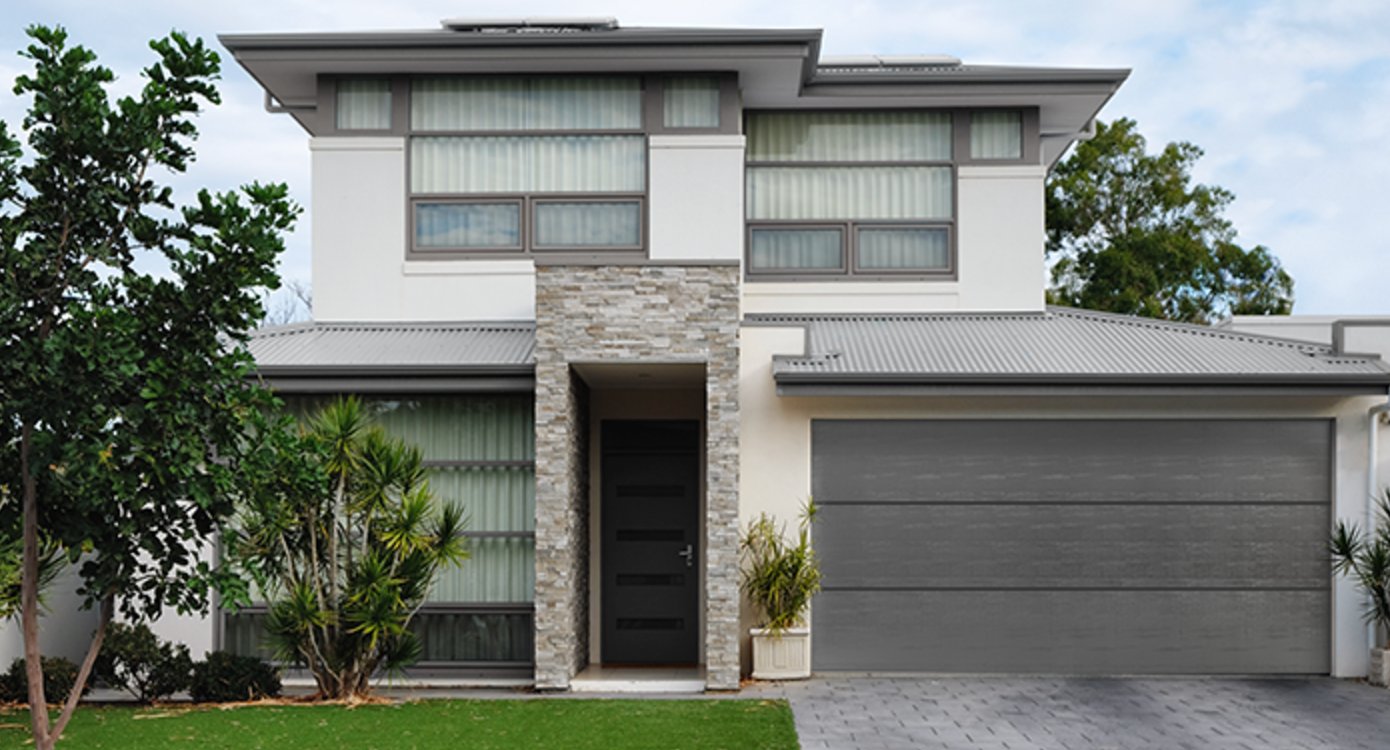
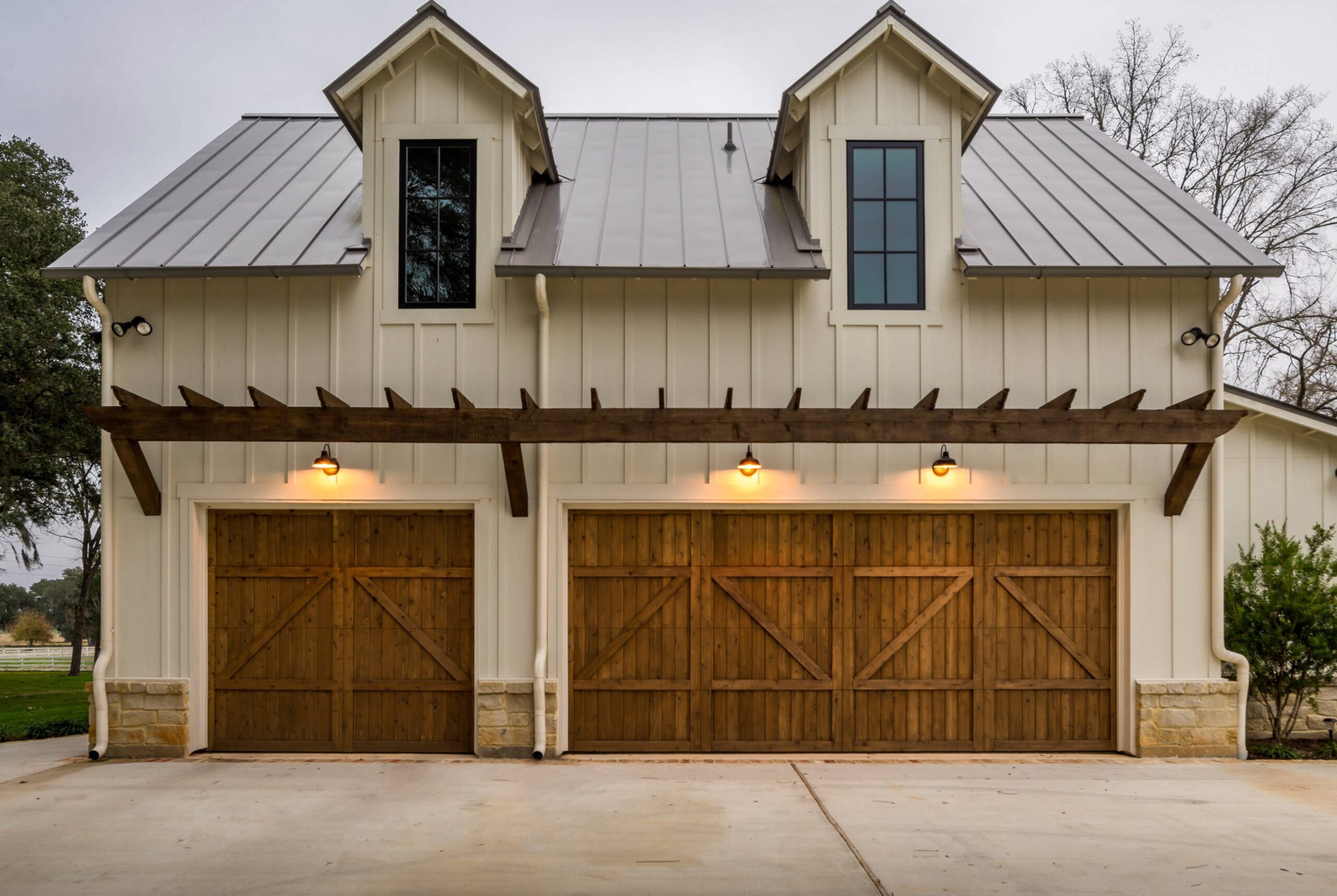
For specific combinations, black doors usually work on a gray house because they repeat the roof, windows, or hardware. Dark brown doors make more sense with beige siding when there is already brown in the roof, brick, or shutters.
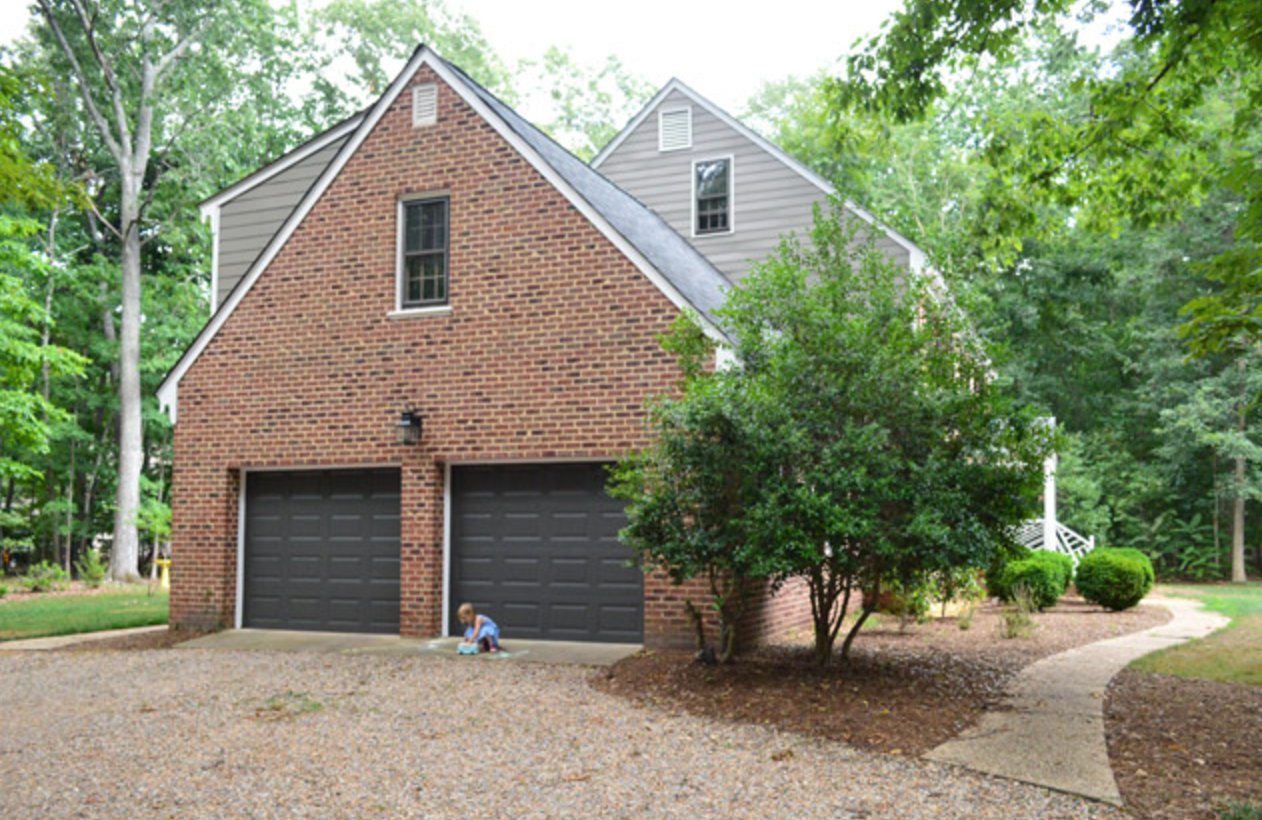
On a brick house, aged bronze is often better than true black. It picks up the darker flecks in the brick and gives the door weight without turning it into a hard rectangle.
Avoid matching your front door color exactly unless the garage door is visually small. On a wide two-car door, that much accent color can overpower the entry.
Still not sure? Go one shade darker than your facade. This adds depth without making the garage door the star of the house.
How to Choose Garage Cabinet Colors?
Garage cabinet colors should respond to the wall color, floor color, and how visually busy the storage area already feels.
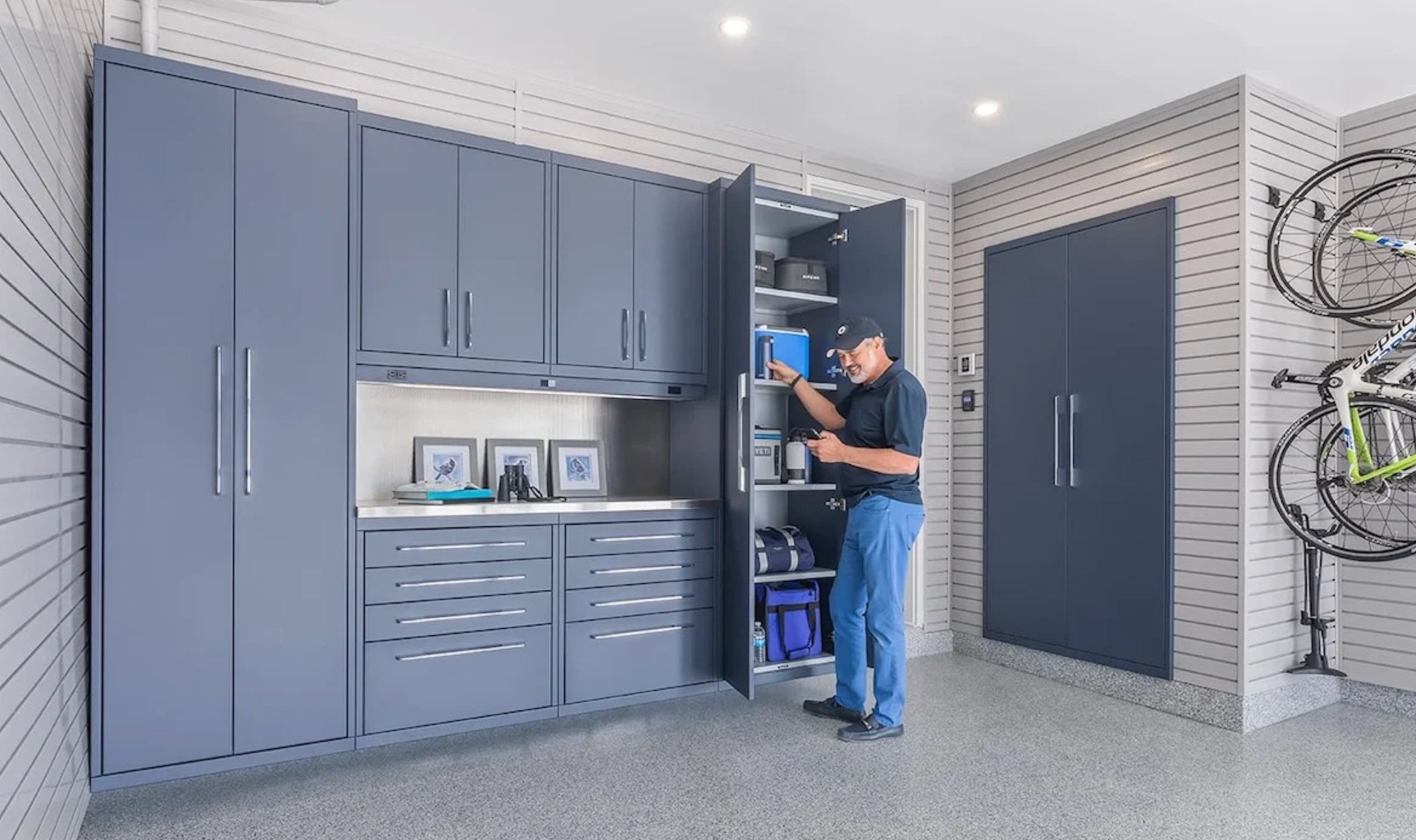
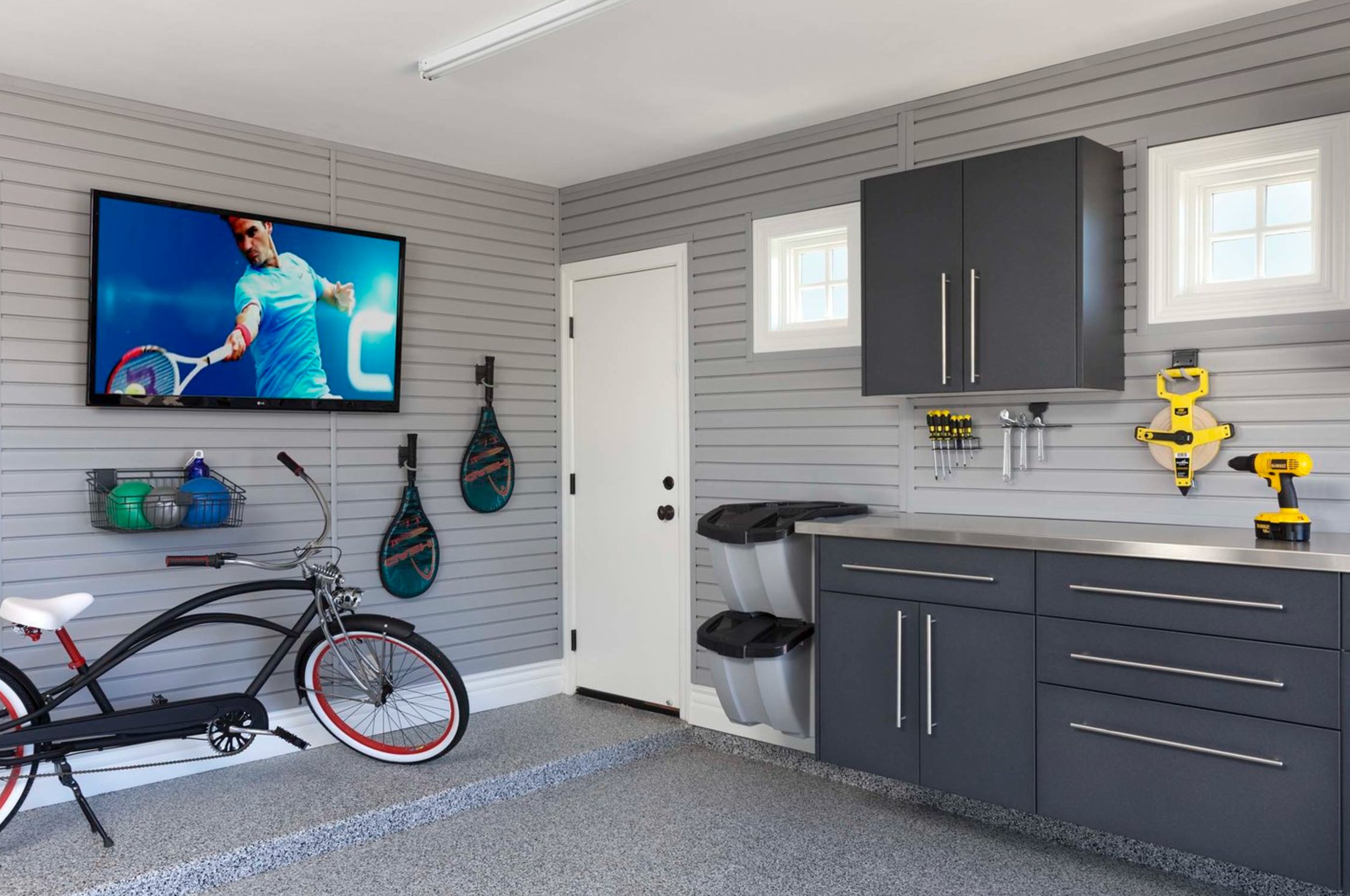
Your cabinets should either blend with the wall color, like gray cabinets with light gray walls, or create intentional contrast. Blending is better when the garage stores a lot of visible gear. Contrast works better when the cabinets are organized and worth showing off.

Lighting changes cabinet color fast. In a darker garage, use lighter cabinet shades so the room does not close in. Under bright LED lighting, deeper blue, red, charcoal, or green can work, but sample them under the actual bulbs because cool LEDs can make paint look harsher.
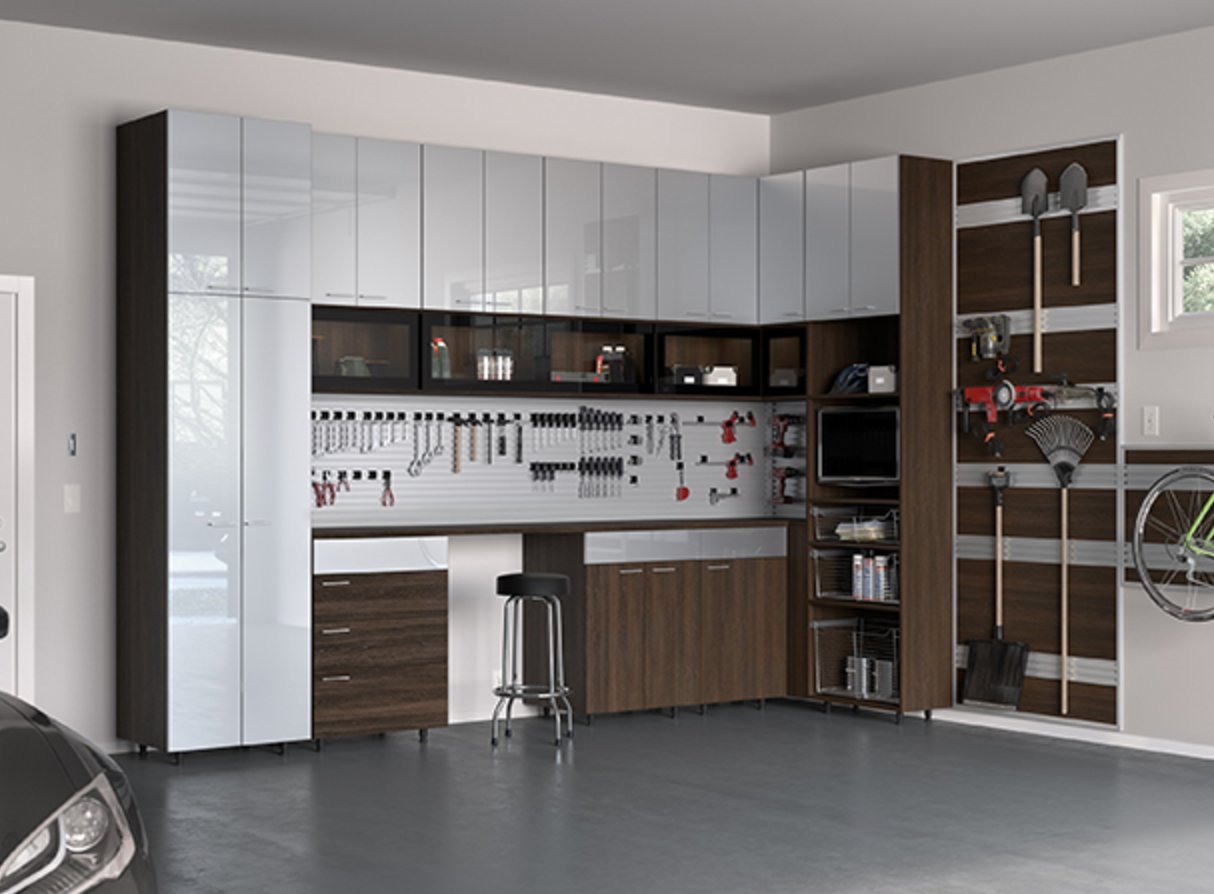
For practical reasons, consider making lower cabinets darker than upper ones because base cabinets take the kicks, tire rubs, and broom marks. Metallic gray is a smart choice because it masks minor dings and scratches. In a smaller garage, white cabinets can make the space feel bigger, but they need better cleaning habits than gray or beige.
How to Choose Garage Floor Colors?
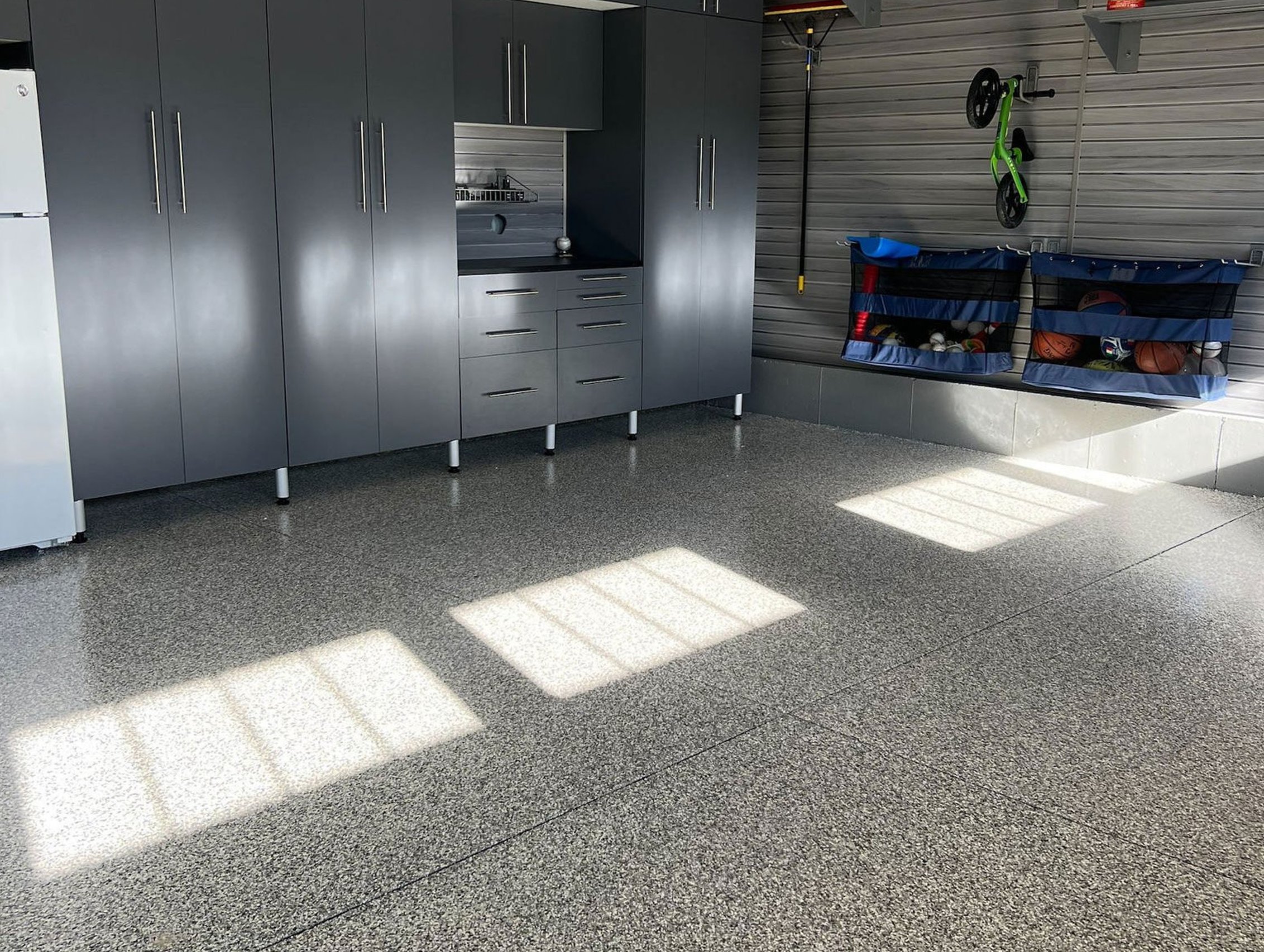
After experimenting with different coatings in my own garage, I usually recommend epoxy with flakes for busy family garages. The flakes break up tire marks, sand, grass clippings, and the fine dust that plain floors show immediately.
I made the mistake of choosing a dark floor first. It looked crisp on day one, then showed every footprint and every bit of dust. Medium gray is easier to maintain. Beige is another practical option, especially when the garage connects to a warmer exterior palette.

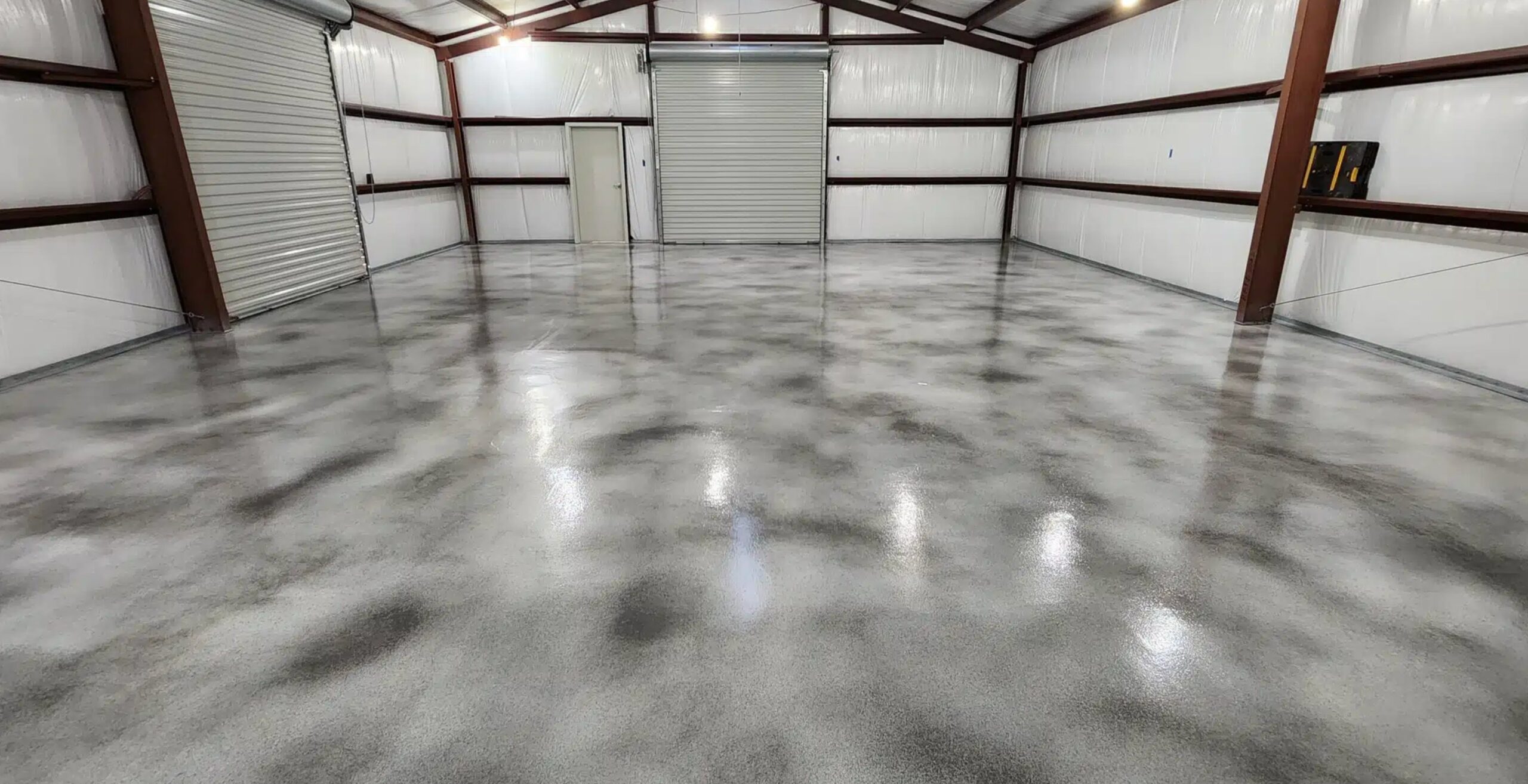
A glossy finish looks clean, but it can get slippery when wet. Use anti-slip additives if rain, snow, or car-wash runoff ends up on the floor. If the garage gets strong afternoon sun, consider polyurethane instead of epoxy because it holds color better against UV fading.

Metallic epoxy floors can look dramatic, but think twice before committing. They are trickier to install, harder to patch invisibly, and more expensive than standard coatings.
When picking a floor color, coordinate with the walls and cabinets, but do not try to match them exactly. A slightly darker or more speckled floor usually wears better. Light-colored floors make dropped tools easier to find, which matters if the garage doubles as a workshop.
5 Best Garage Color Schemes
1. Modern Minimalist Garage
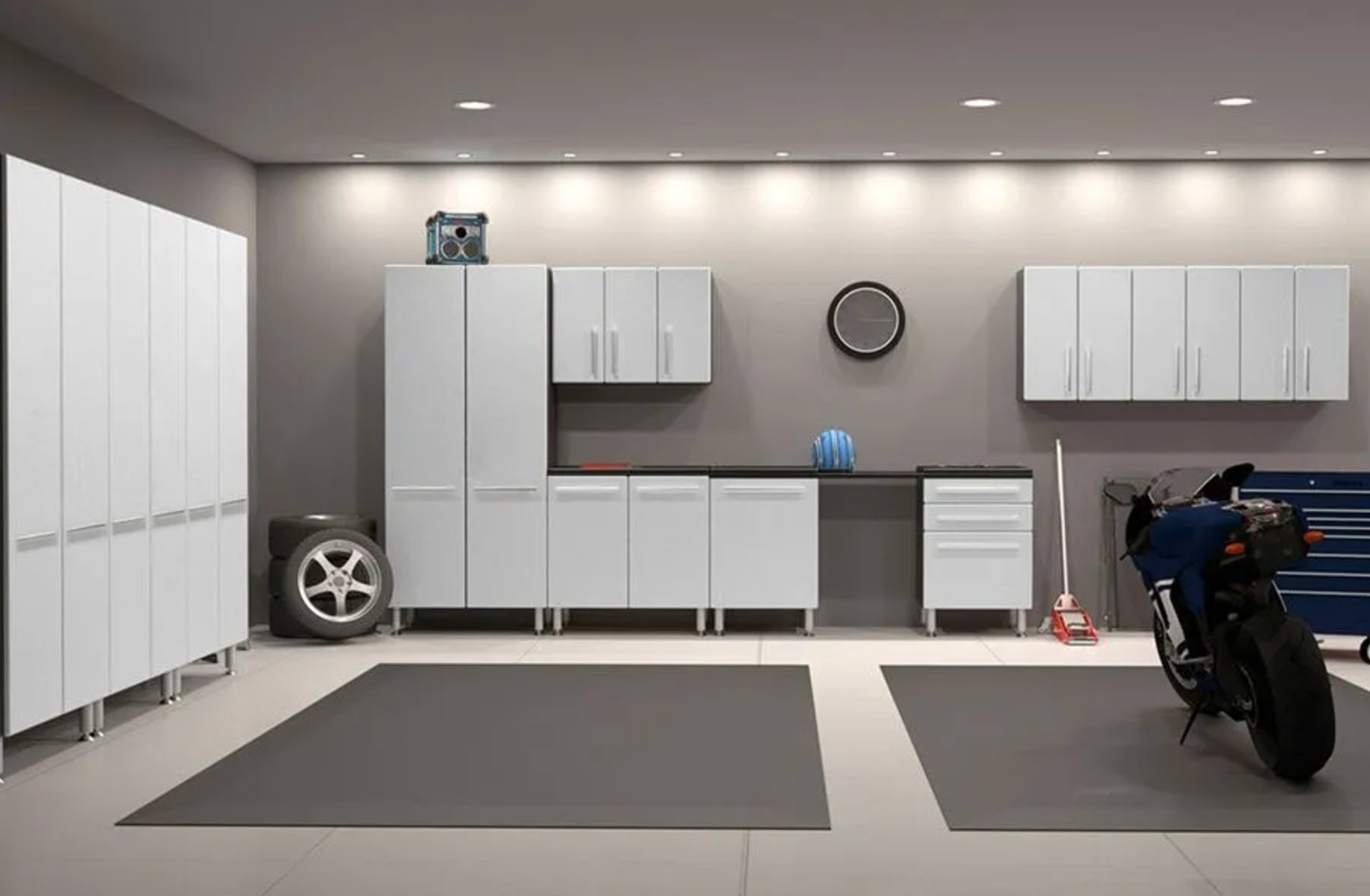
A modern garage works best when the palette is edited, not empty. In this example, neutral gray walls give the white cabinets and furniture enough contrast without making the room feel cold.
Gray walls add depth and hide the scuffs that show up around tools, bikes, and shelving. This is a good choice for a working garage that still needs to look clean from the house entry.
Paint suggestion: Sherwin-Williams Mindful Gray (walls), Benjamin Moore Super White (cabinets).
2. Coastal Fun Garage

The yellow stripe gives this garage energy without covering every wall in a loud color. That is the right way to use a strong accent in a utility space.
The light gray cabinets stay quiet, so the surfboard, stripe, and blue floor can carry the coastal mood. A blue floor is a commitment, so I would use it only when the rest of the garage stays restrained.
Paint suggestion: Benjamin Moore Manchester Tan (cabinets), Sherwin-Williams Decisive Yellow (accent stripe), Benjamin Moore Ocean Floor (floor).
3. Classic Black & White
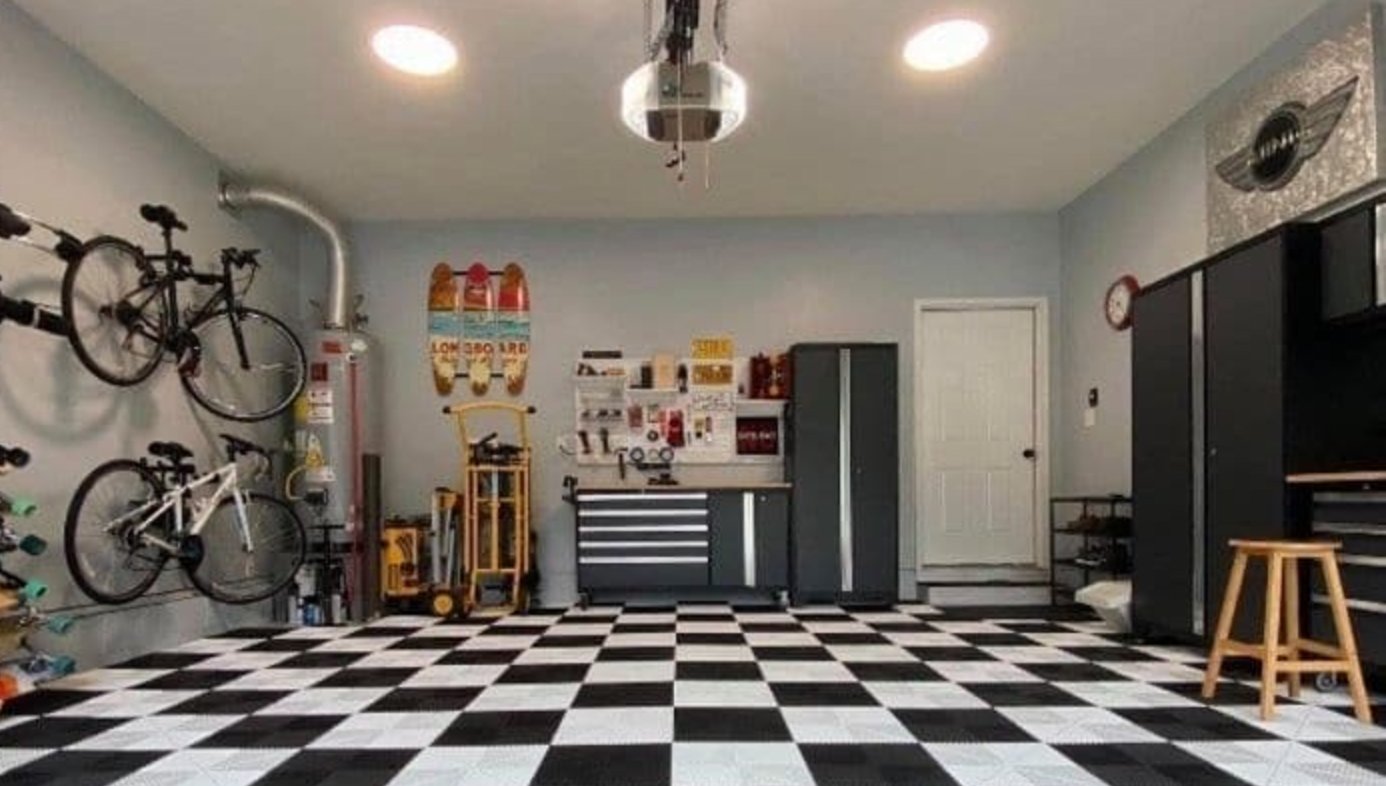
A checkerboard floor is useful in a garage because the pattern disguises small stains, tire dust, and the little messes that happen between cleanings.
The black and white combination also gives you freedom with shelving, metal finishes, sports gear, and collectibles. The one caution is contrast: keep the walls or ceiling lighter so the floor does not make the whole garage feel heavy.
Paint suggestion: Benjamin Moore Carbon Copy (tiles), Sherwin-Williams Extra White (tiles).
4. Sport-Inspired Red
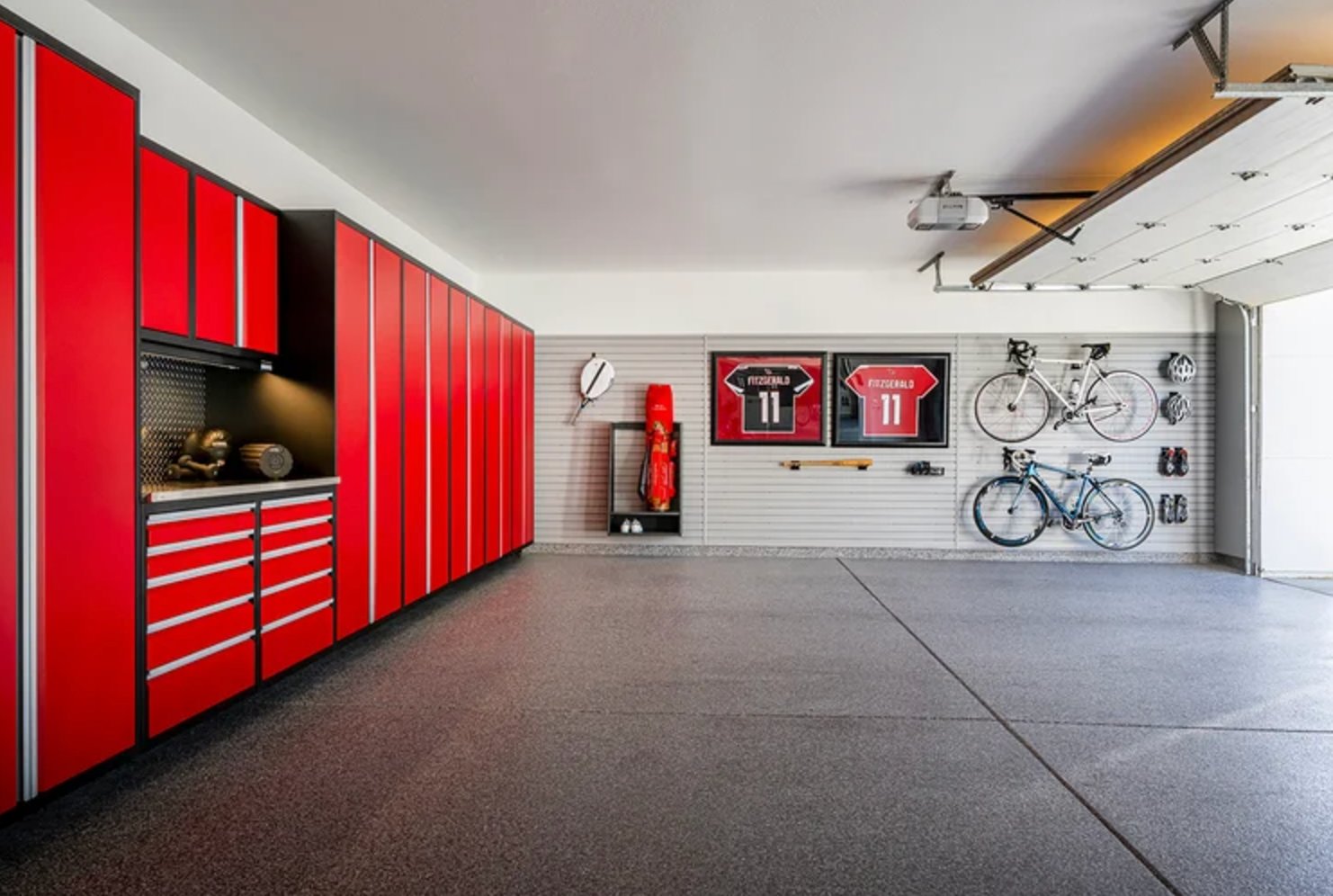
Red cabinets are a statement, so use them where you want the garage to feel sporty and high-energy. They work best against gray walls because the gray cools the red down and gives sports equipment a cleaner backdrop.
Paint suggestion: Sherwin-Williams Stop (cabinets), Benjamin Moore Gray Owl (walls).
5. Neutral Elegance

A beige-gray color scheme is practical for a garage that connects directly to the living area. It feels less abrupt than bright white or black when you open the interior door, and it works with most concrete, stone, and wood tones. The textured flooring is not just decorative. It adds grip underfoot.
Paint suggestion: Benjamin Moore Revere Pewter (walls), Sherwin-Williams Agreeable Gray (cabinets).

I'm Elizabeth, your go-to guide for all things paint and design! My days are filled with color swatches and innovative room makeovers. When I'm not painting the town - literally - I'm soaking up inspiration from my travels. This blog is my way of sharing my passion and making the world a more vibrant place, one color palette at a time.