Best Exterior Green House Colors
The best green exterior house colors are the ones that work with your light, roof, stone, brick, and landscaping. Green can read soft and traditional, nearly black and dramatic, or warm and earthy, so the right choice depends less on the paint chip and more on the whole exterior.
I like green on a house exterior because it can soften hard materials without looking bland. A muted sage can calm busy trim, an olive can flatter stone, and a deep forest green can make simple siding look more intentional.
Before you commit, sample on at least two sides of the house. South and west exposures make many greens look warmer and lighter, while north-facing walls can push deep greens close to black.
1. Black Forest Green by Benjamin Moore

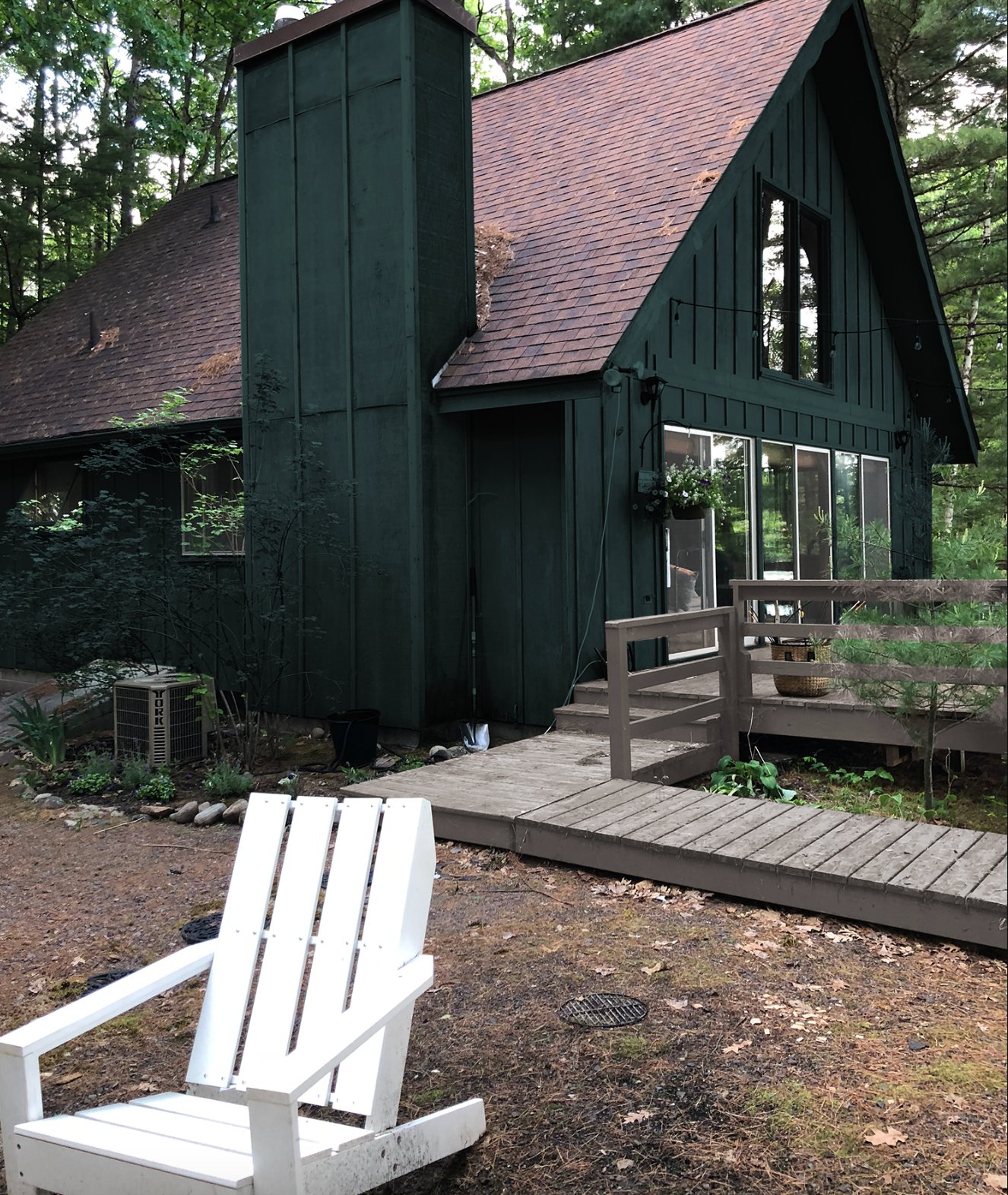
Black Forest Green by Benjamin Moore is a deep green with enough black in it to behave almost like a soft exterior black. On a full facade, it feels wooded and quiet rather than flashy.
In good daylight, the green and blue notes come forward. In low light, it can look nearly black, so I would not use it without lighter relief from white columns, pale porch steps, cream trim, or a warm wood door.
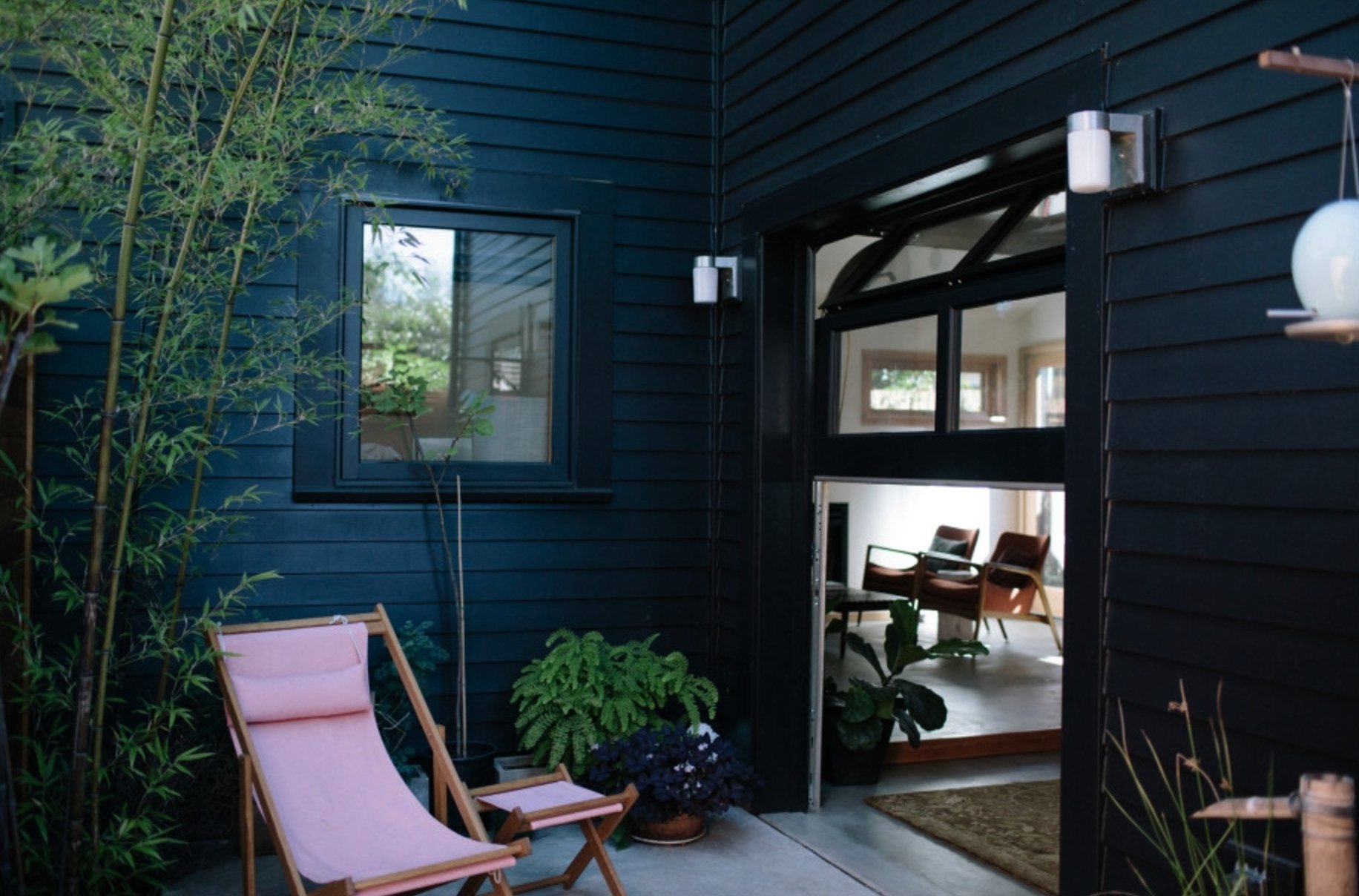
This is one of the better choices for homes tucked into trees because it lets the house sit back into the site. It can work on cabins, Colonials, cottages, and cleaner modern forms, but it needs contrast at the windows and entry so the architecture does not disappear.
I would sample Black Forest Green on the shadiest wall first. If that wall still reads green, the rest of the house will usually be strong.
2. Rookwood Dark Green by Sherwin Williams

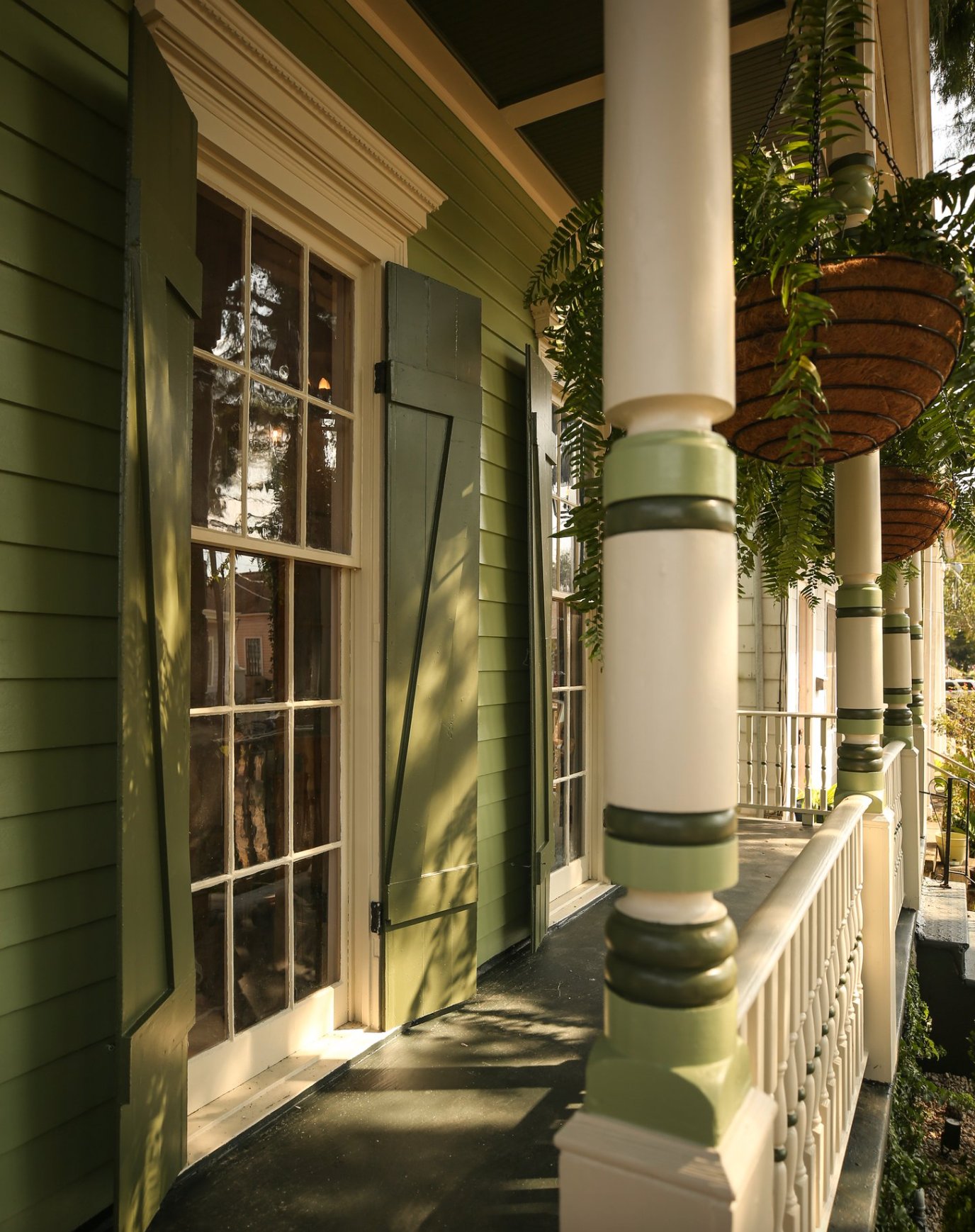
Rookwood Dark Green is dark on the chip, but it opens up outdoors, especially where afternoon sun warms the siding. It has the kind of depth I expect from a historic color, not the flat look some dark greens get in cheaper formulas.
White trim around windows and doors gives it enough outline to show off the architecture. On Victorian homes, that contrast brings out brackets, porch rails, and divided lights. On modern builds, it reads clean and tailored.
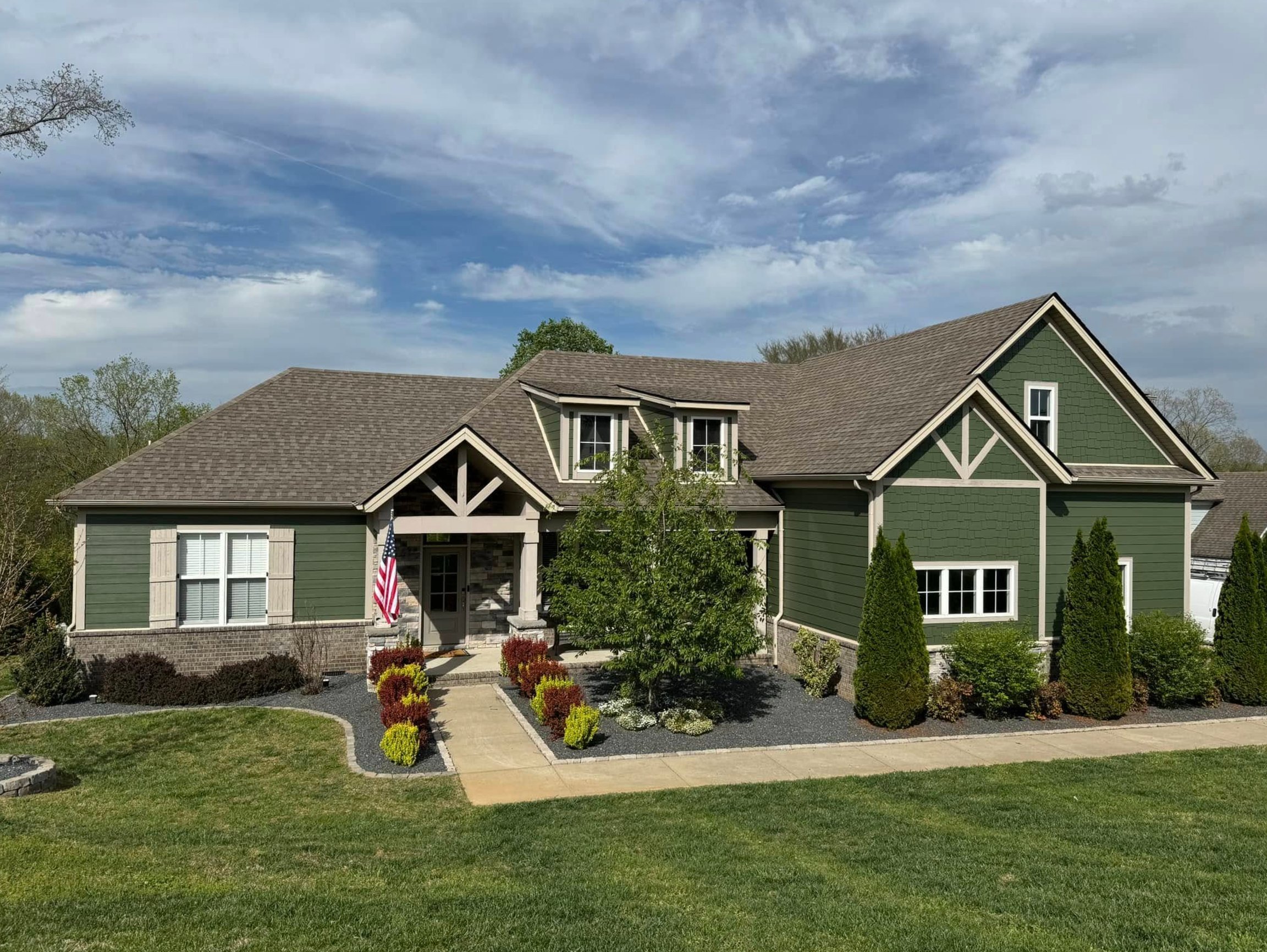
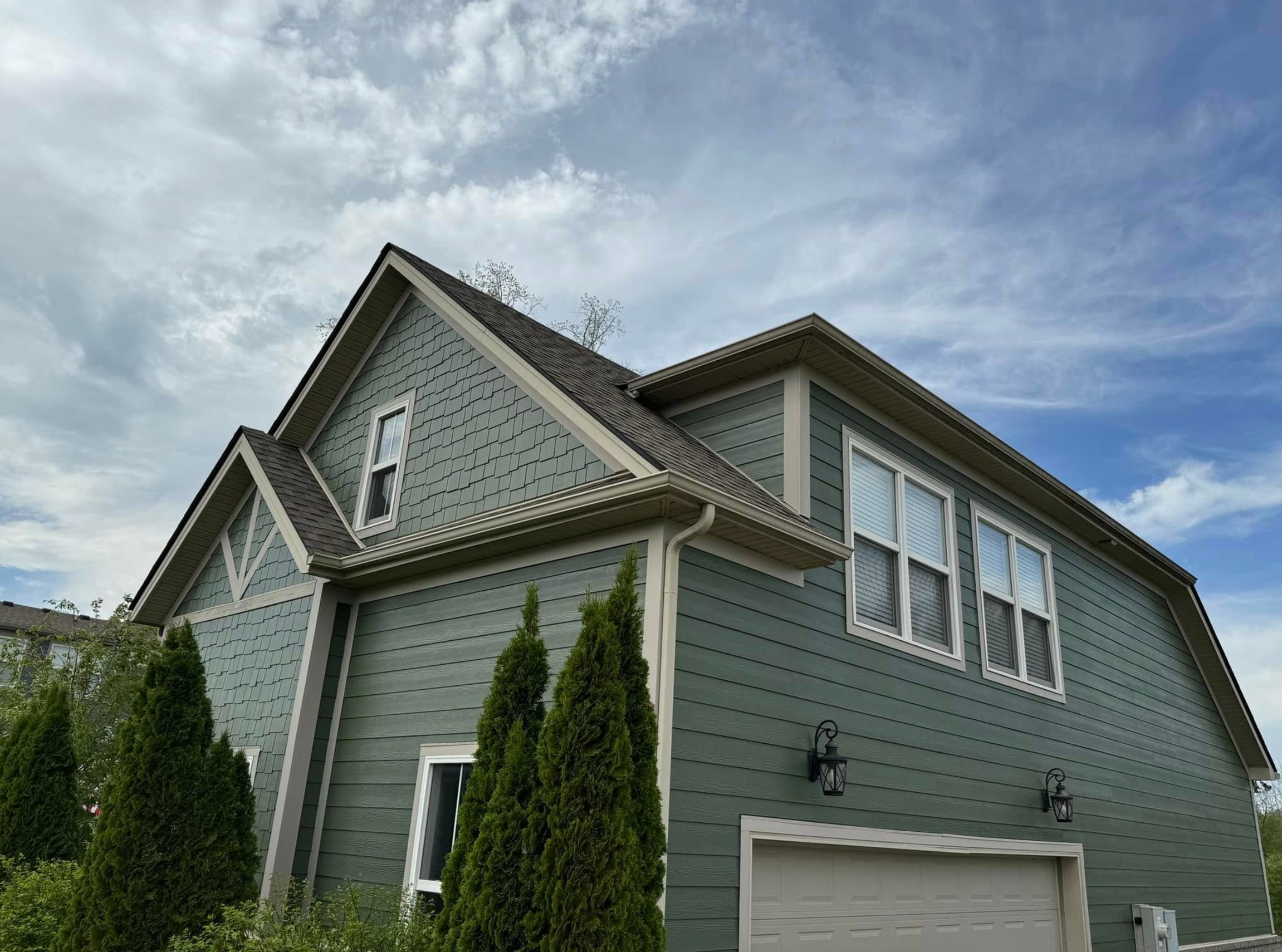
One caution: it can go heavy on north-facing walls or under deep porch roofs. If your front elevation gets little direct sun, sample a lighter green from the same family before you commit to the whole house.
3. Saybrook Sage by Benjamin Moore

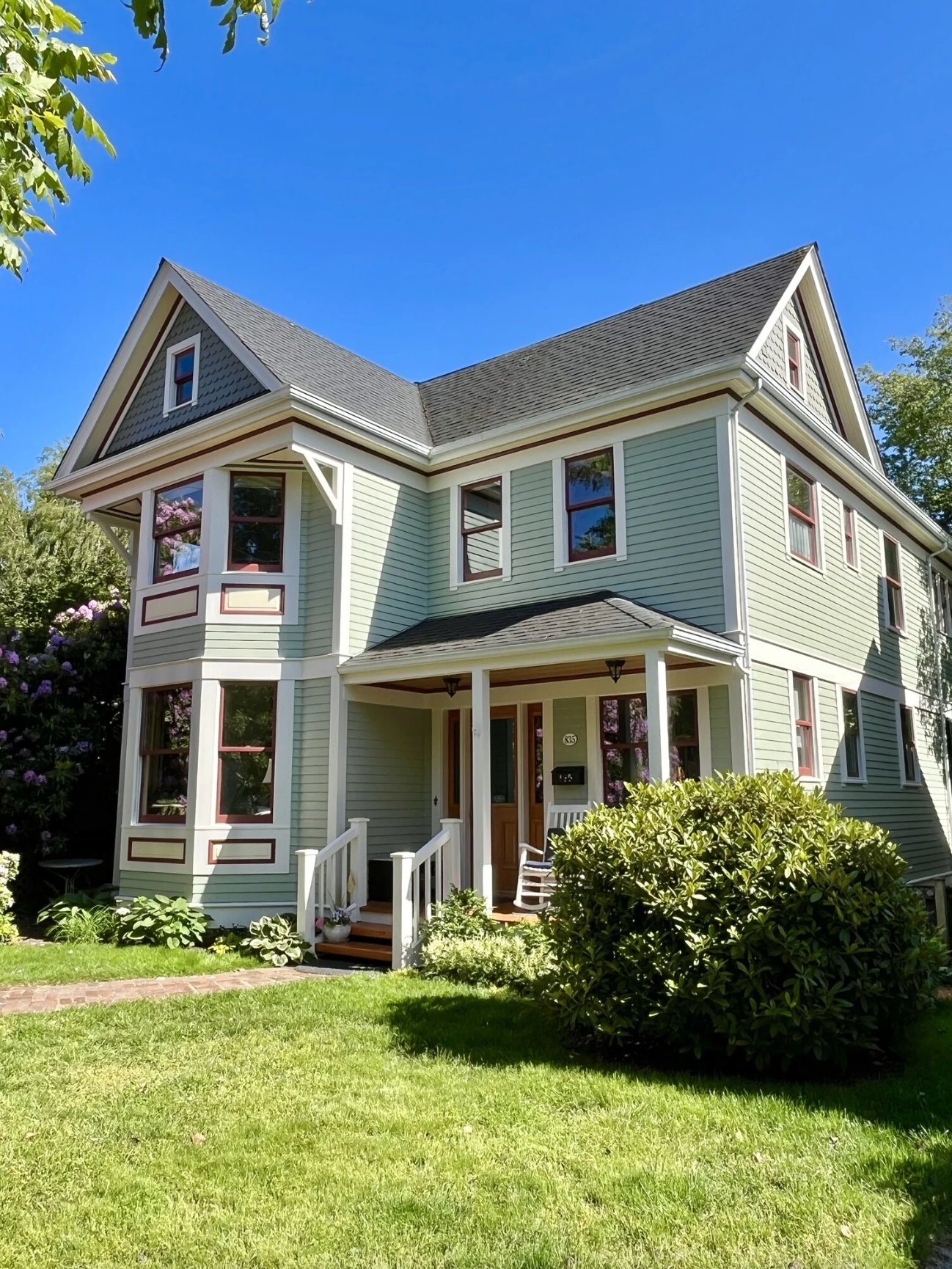
Saybrook Sage is a safer green for homeowners who want color but still need the house to feel settled. It has enough gray to quiet the green, which is why it works so well on Colonial and contemporary homes.
The gray undertone keeps it from shouting against the lawn or street trees. You still see a real green facade, but it will not fight brick steps, fieldstone, or older concrete walks.
Use white trim if you want a crisp, traditional read. For a quieter exterior, pair Saybrook Sage with natural stone, stained wood, and off-white instead of a hard blue-white.
4. Studio Green by Farrow & Ball

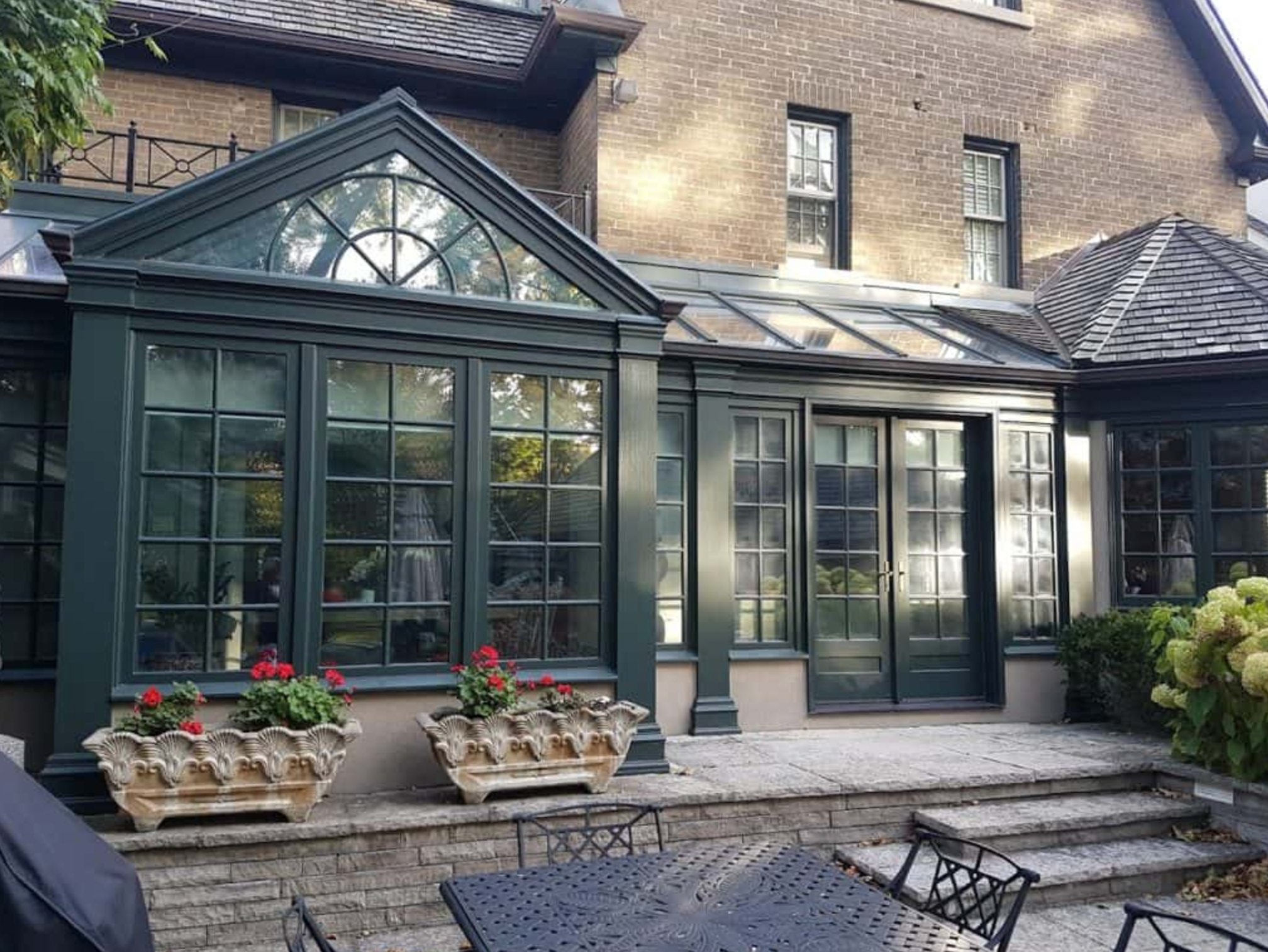
Studio Green is a complex exterior color for people who want the drama of black but not a true black house. It is deepest in shade and noticeably greener in direct sun.
On sunny days, the facade reads as a dense green. Under clouds, it shifts toward almost black, so the trim color matters. I would test it beside the actual roof, gutters, and masonry before choosing the final white.
White trim and stone accents give Studio Green structure. Wood details help too, especially cedar, oak, or a warm front door that keeps the palette from feeling severe.
Studio Green was created in Farrow & Ball's original studio, where the company developed its first paints. That history does not replace sampling, but it does explain why the color feels more layered than a basic off-the-shelf dark green.
5. Aegean Olive by Benjamin Moore

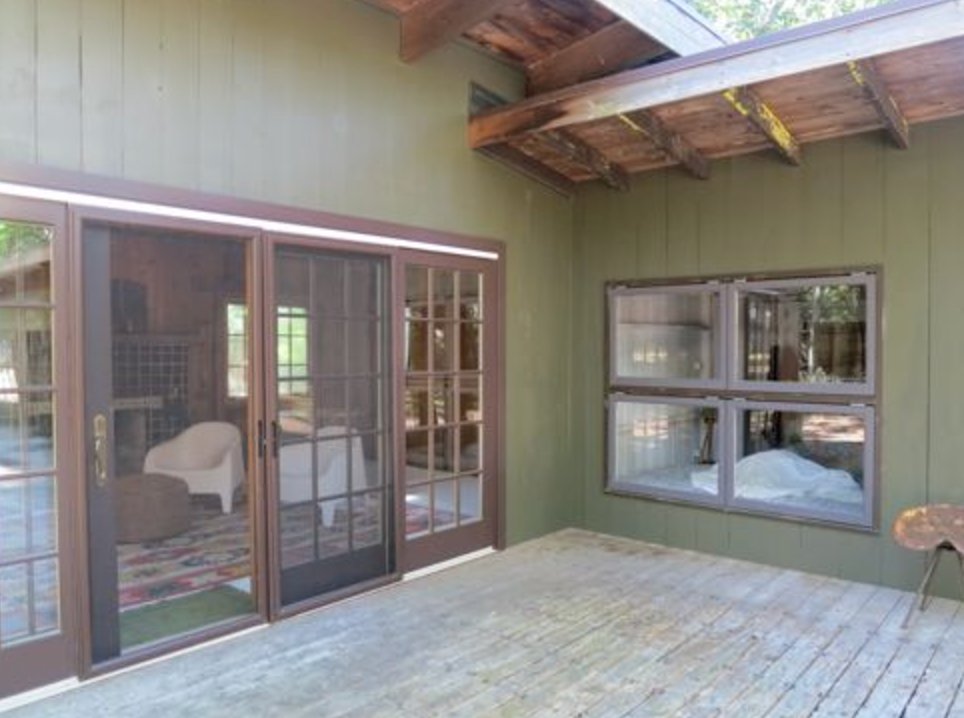
Aegean Olive by Benjamin Moore is not a clear green. It sits where olive, brown, and muted green meet, which makes it useful on exteriors with stone, brick, or warm roofing.
Because it is deep and warm, it looks more grounded than many sage greens. It is especially good when the landscape has dry grasses, mature trees, mulch beds, or tan stone that would make a cooler green feel disconnected.
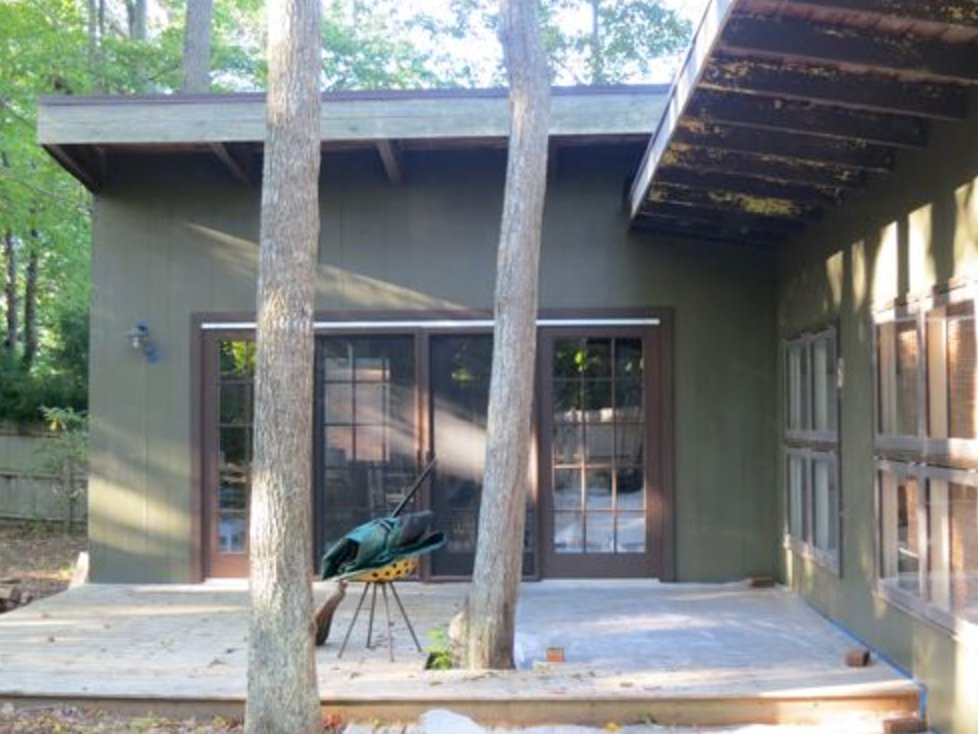
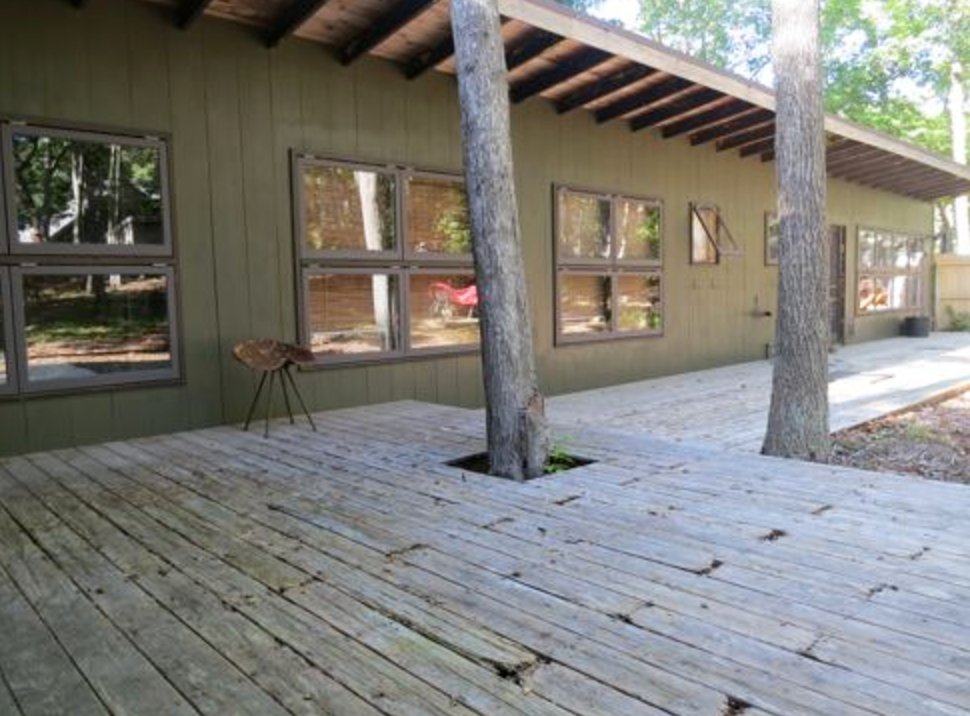
On the facade, Aegean Olive works like a foundation color. It is not bright or gardeny. The brown undertones give it weight and help it avoid the artificial look that some yellow-greens get in strong sun.
6. Sage Mountain by Benjamin Moore
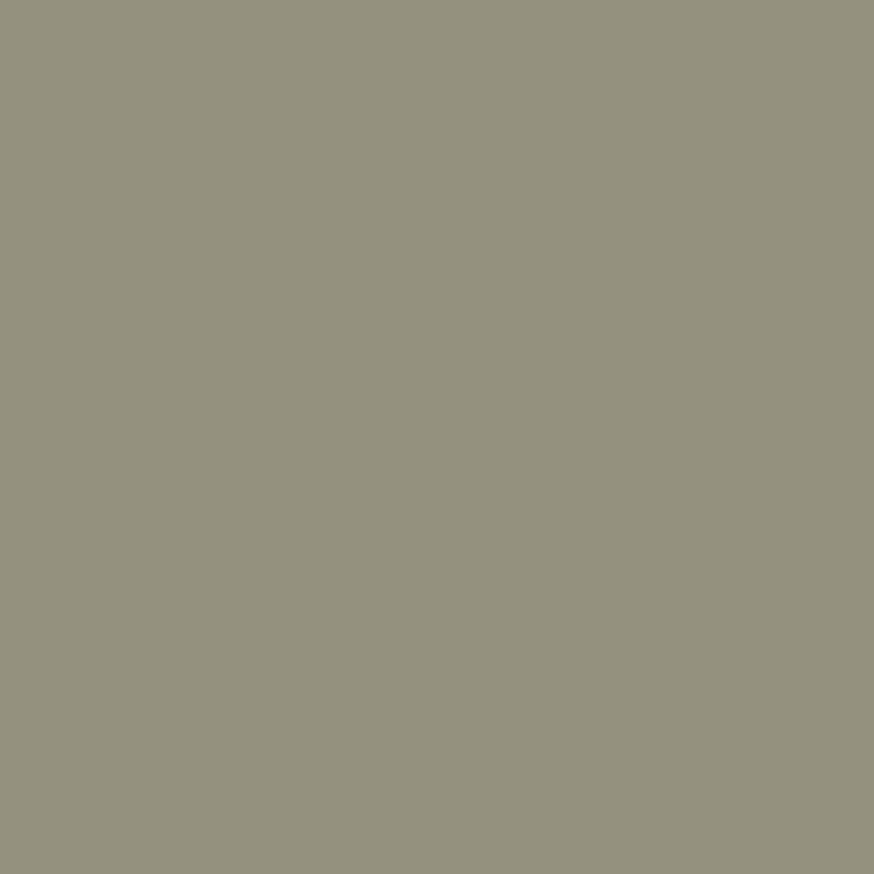
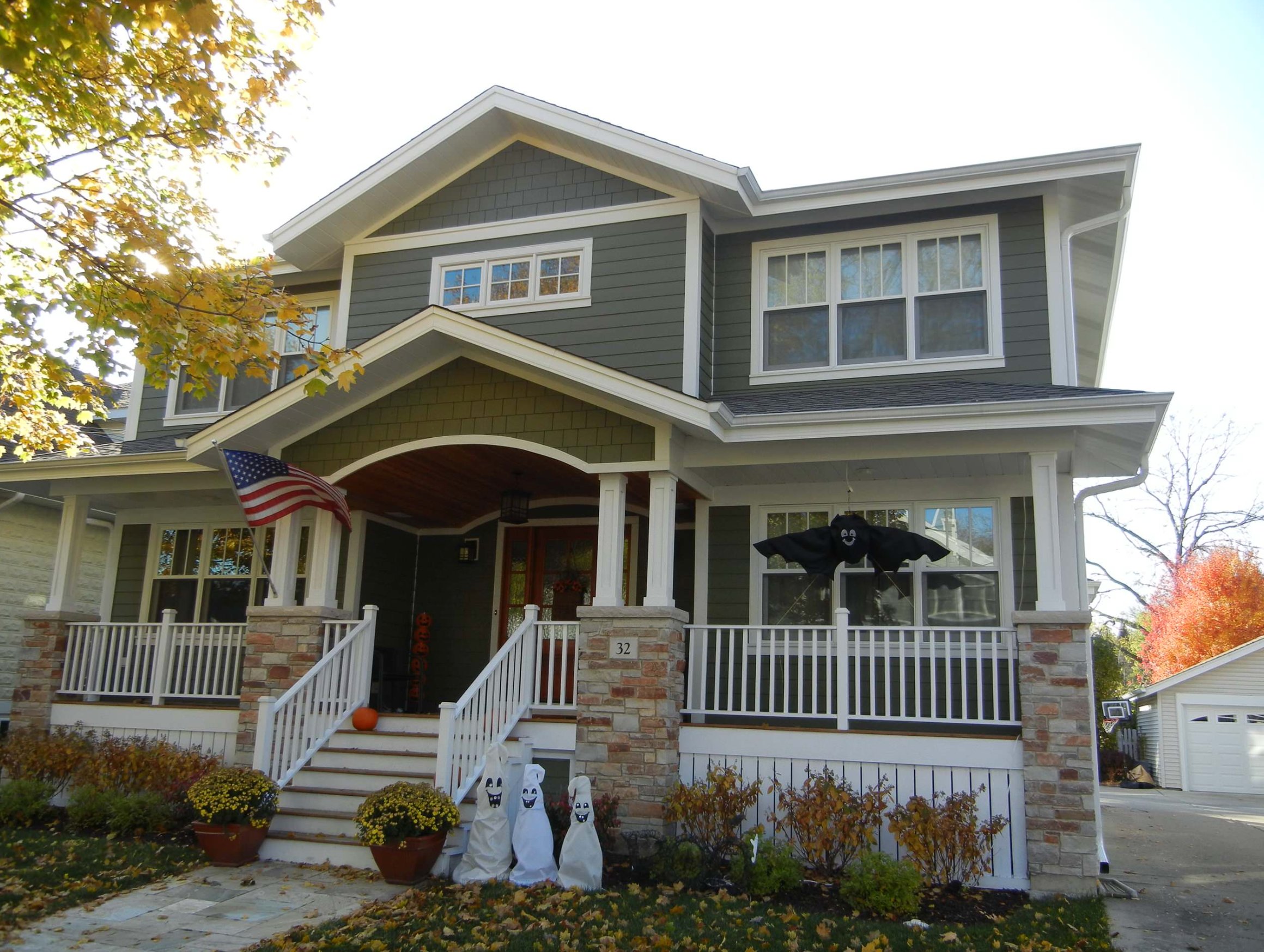
Sage Mountain by Benjamin Moore is earthy first and green second. That matters if you want a green exterior that will pass in a conservative neighborhood or an HOA setting.
Darker shutters and doors give Sage Mountain more shape. Copper gutters, lanterns, or address numbers are a natural fit because the metal's warmth plays well against the muted green body color.
7. Salamander by Benjamin Moore

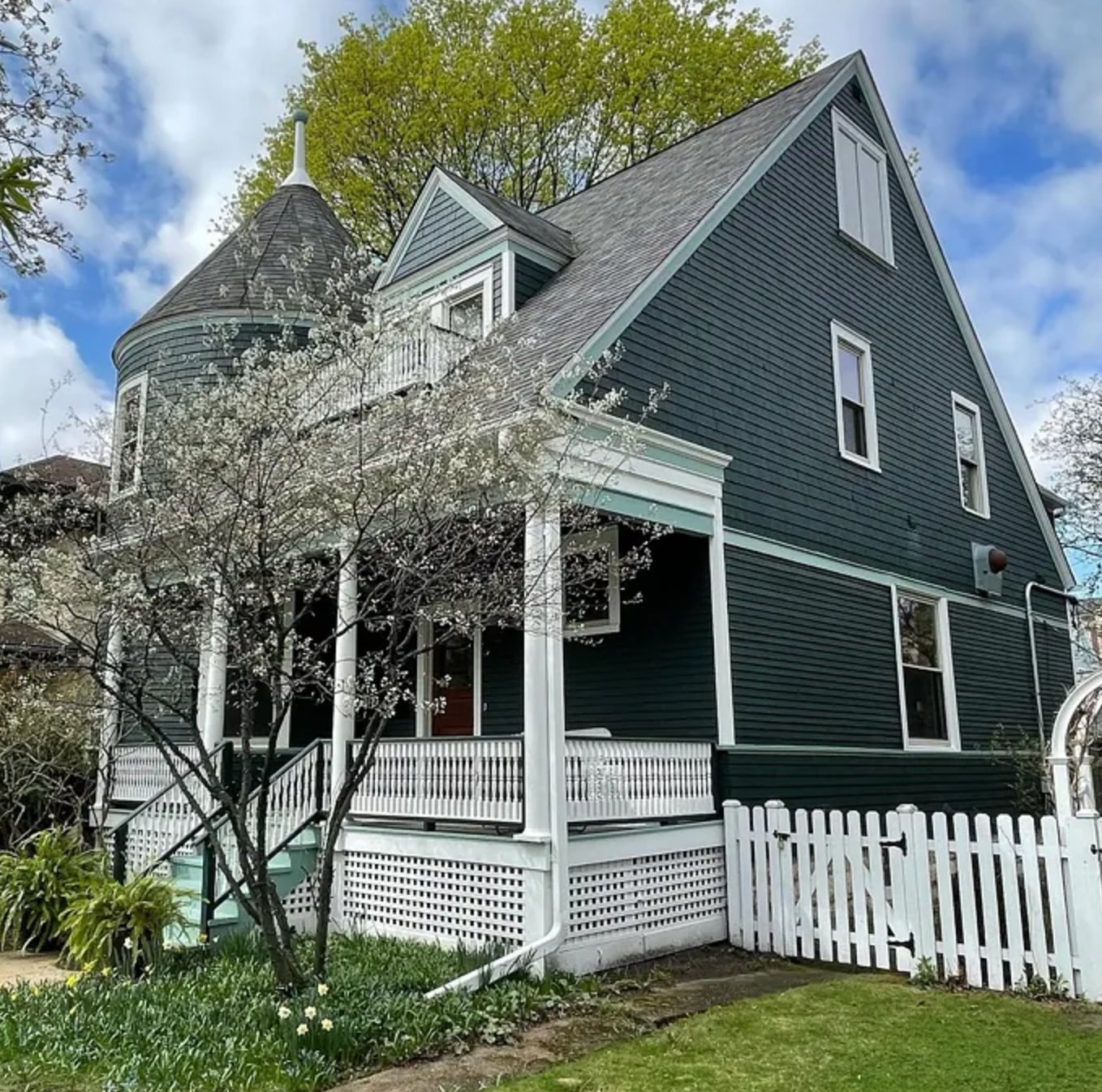
Salamander by Benjamin Moore is a strong dark green that often looks almost black indoors. Outside, daylight pulls more green out of it, so it has more life than a flat black siding color.
The yellow-green undertone keeps Salamander warmer than many greens this deep. That warmth helps on cloudy days, when cool dark colors can make a house look a little sunken.
It can carry the main siding color, but it is also a good choice for doors, shutters, and roofline details when the body color is lighter. If the house has a lot of shade, I would use it as an accent before I used it everywhere.
The more direct sun Salamander gets, the greener it will look. In shaded spots, expect an almost black read.
8. Louisburg Green by Benjamin Moore
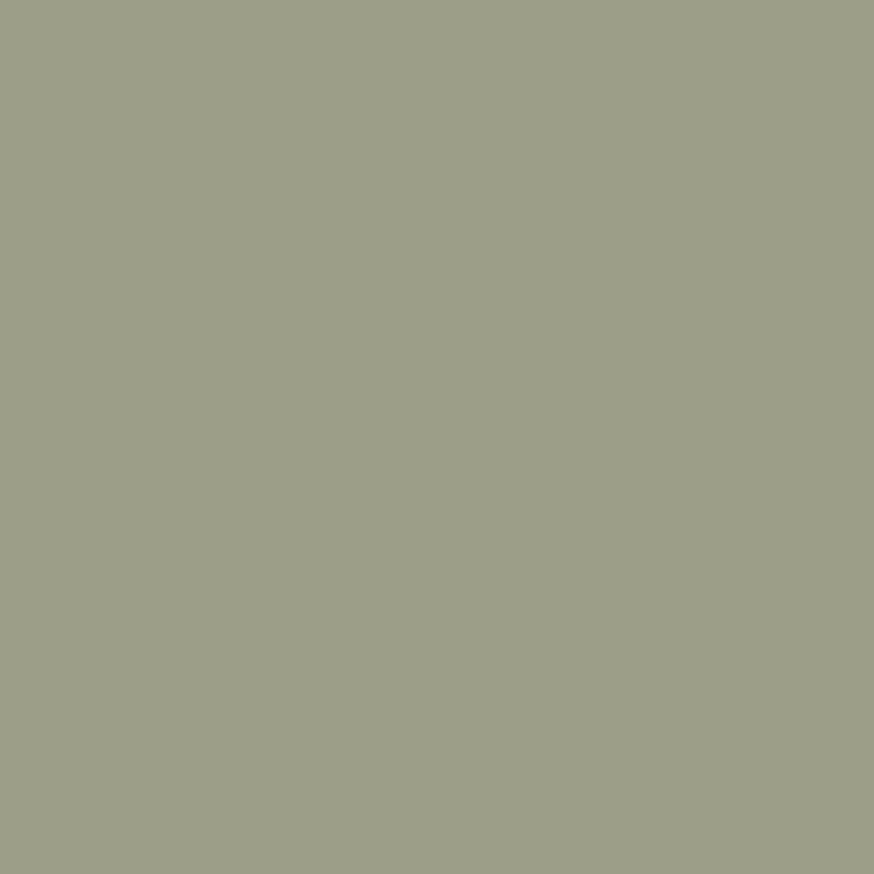
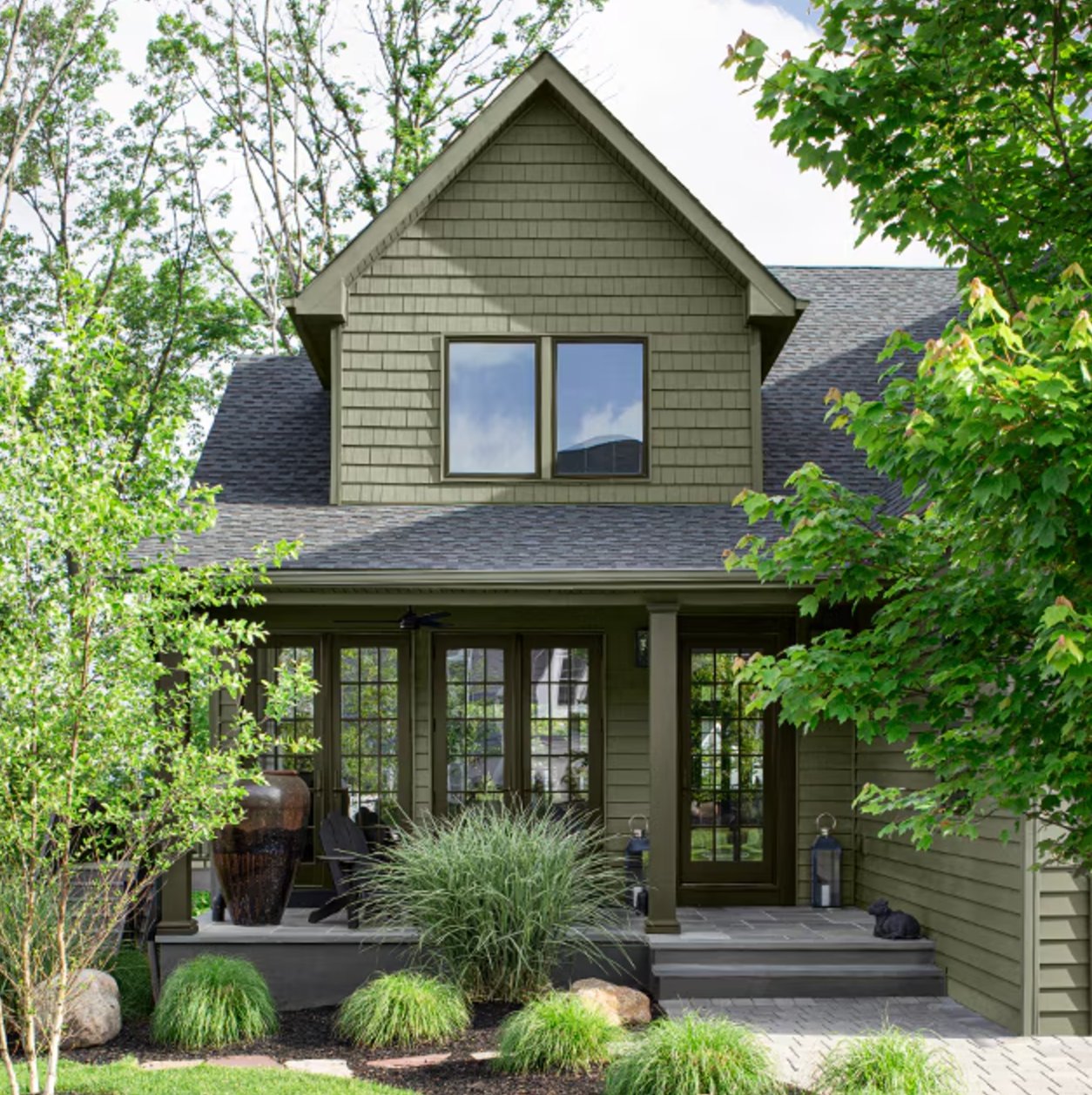
Louisburg Green is a livable green with enough gray to stay calm on a large facade. It is a good middle ground when sage feels too pale and forest green feels too dark.
Throughout the day, it can move from soft pine needle green in shade to a deeper green in sun. It looks strong next to wood and stone, but test it carefully on the north side of the house because that exposure can make the gray undertone feel cooler.
9. Oakmoss by Sherwin Williams
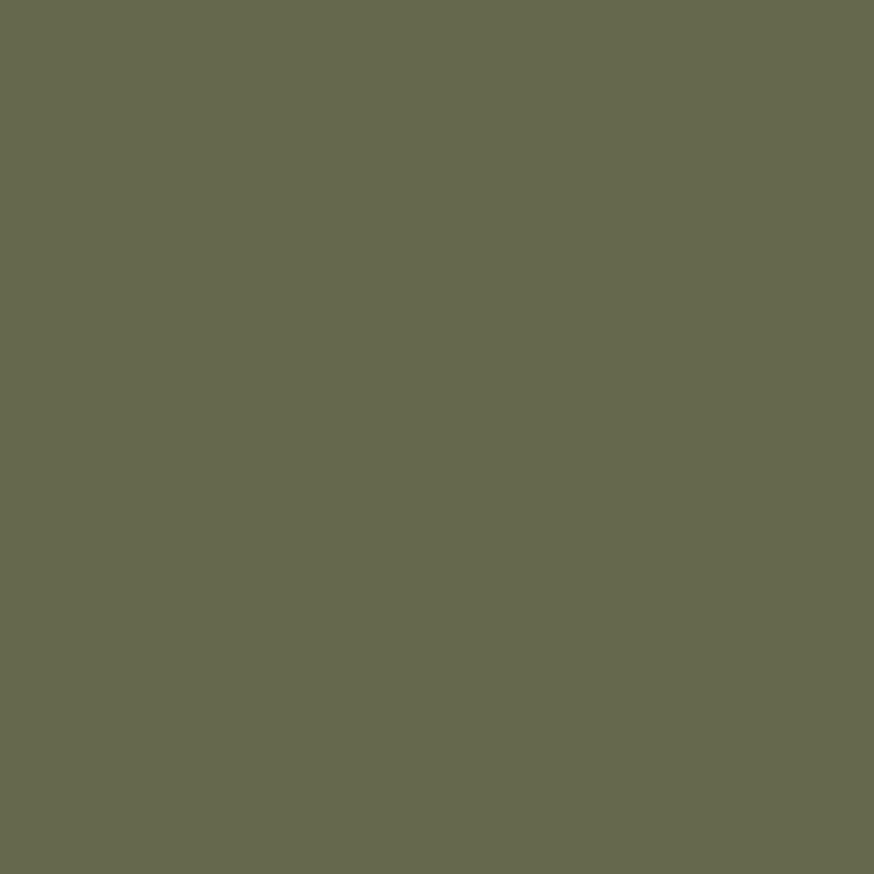
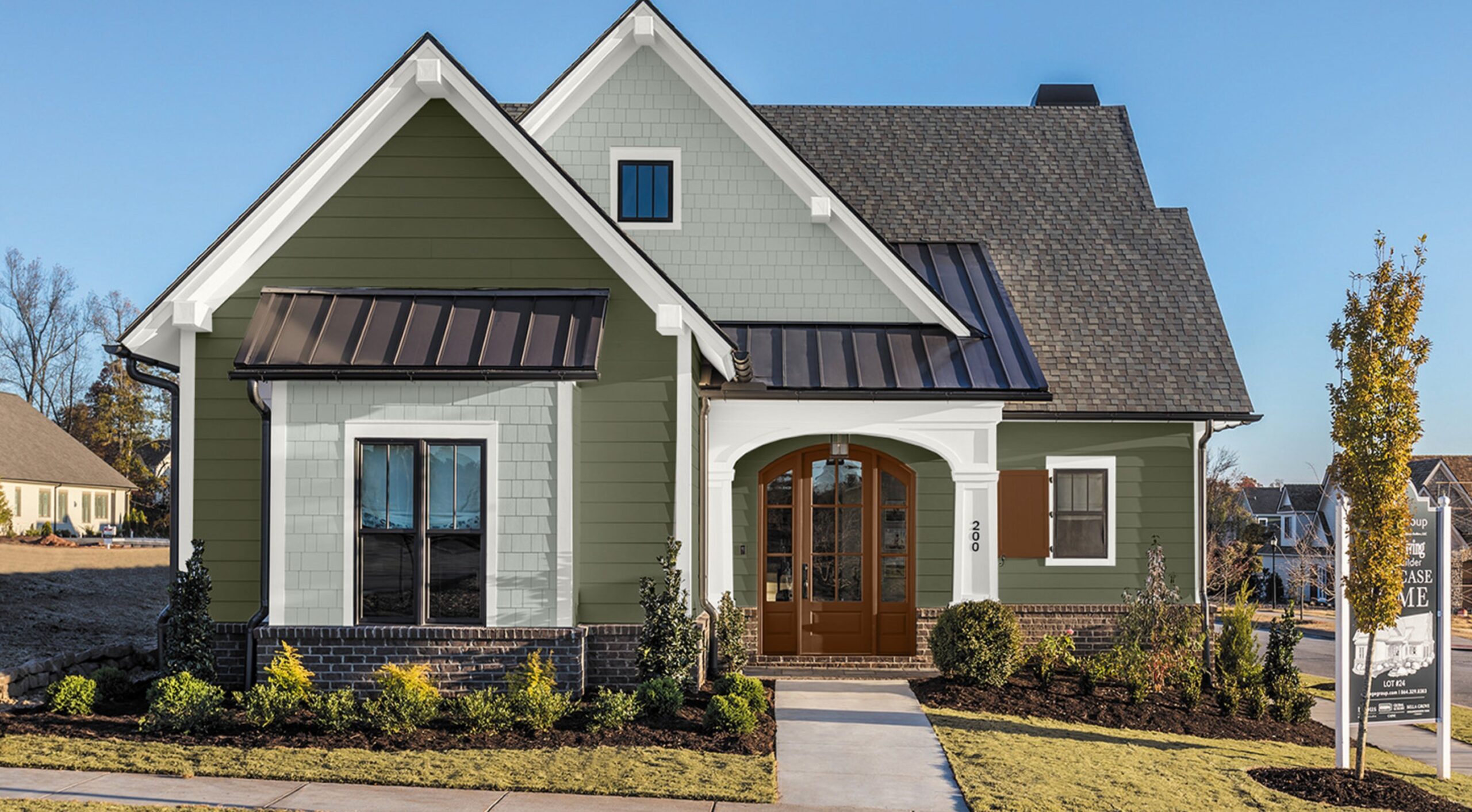
Oakmoss SW 6180 has depth and warm yellow-gray undertones, so it feels related to bark, moss, and dry leaves instead of reading as a clean decorative green. On a house near trees, that undertone does a lot of work.
Oakmoss shifts between gray and brown depending on the light, which makes it adaptable across ranch homes, Craftsman exteriors, and simple lap siding. It has presence without making the house the loudest one on the block.
I like it most as a neutral body color when the exterior already has several materials. It can hold together white windows, black lights, stone veneer, and stained wood without adding another competing note.
White trim around windows and doors gives Oakmoss a classic outline. If your roof is warm brown or weathered gray, this color is especially worth sampling.
10. Jasper by Sherwin Williams

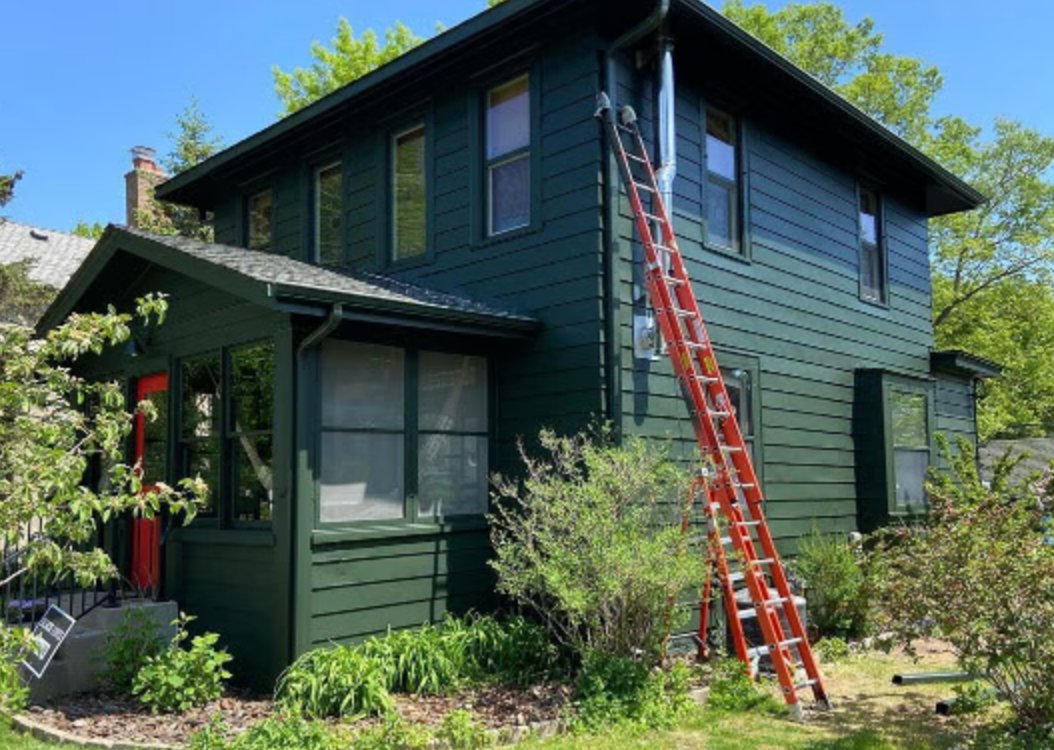
Jasper by Sherwin Williams is a deep forest green with an LRV of 4, so it is very dark. Do not judge it from a tiny chip alone. It may look gray-green there, but on exterior walls it reads as a true dark green.
Jasper changes with the light. It can warm up in sun and show a cooler blue-green side in shade, which is why I would sample it beside both the trim and the roof.
As an accent, it gives doors, shutters, and gables real weight. As a whole-house color, it needs clear trim contrast because low light will push it close to black.
11. Hunter Green by Benjamin Moore

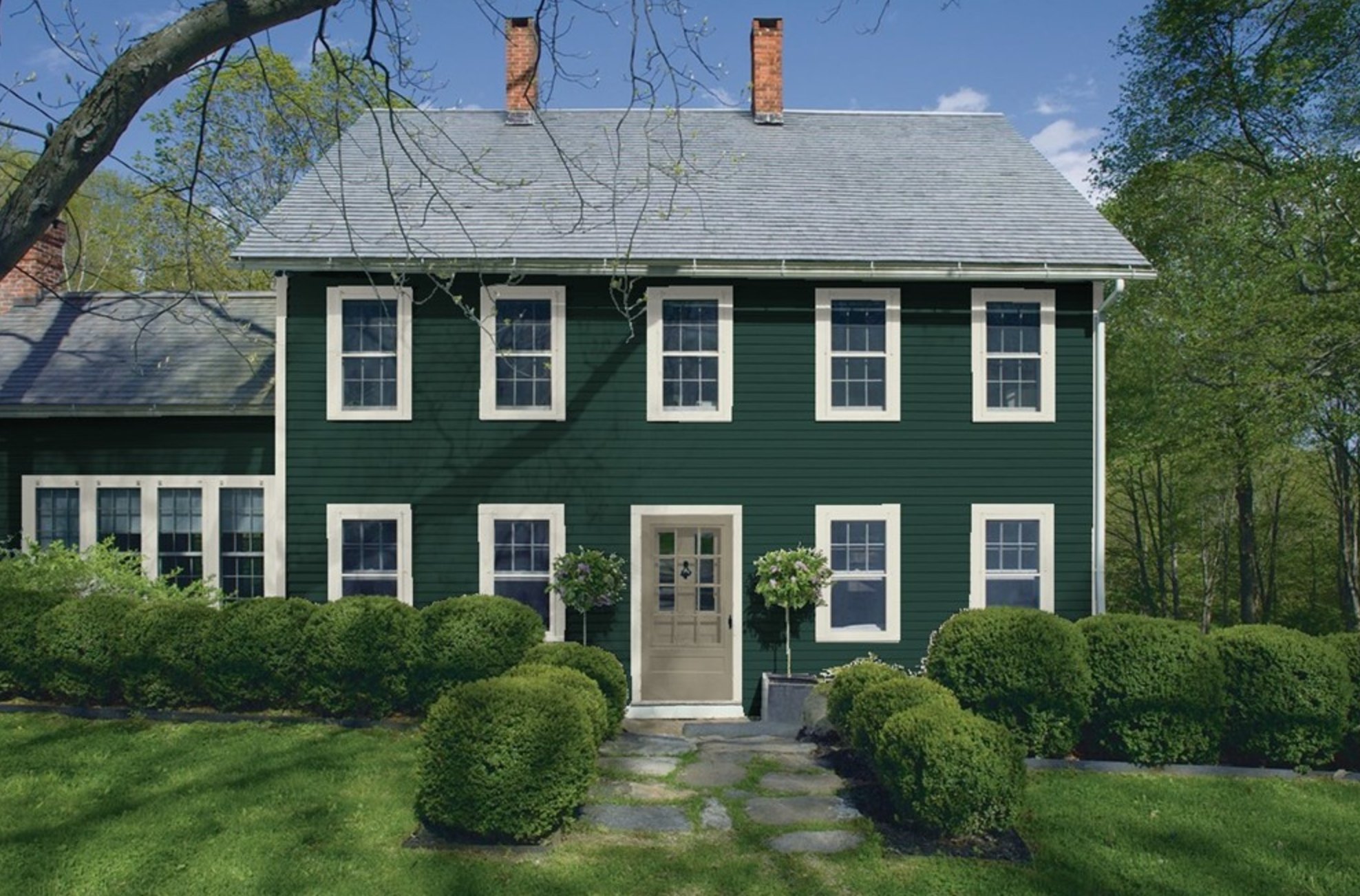
Hunter Green is a classic dark green with a subtle cool undertone. That cooler note keeps it crisp, especially when the house has white trim or black exterior hardware.
Its LRV of 6.39 is low, but exterior daylight gives it enough lift to stay visibly green. With white trim, it has a timeless American look. On cloudy days, the cool undertone is more noticeable, so check it against warm brick before you paint.
12. Vintage Vogue by Benjamin Moore

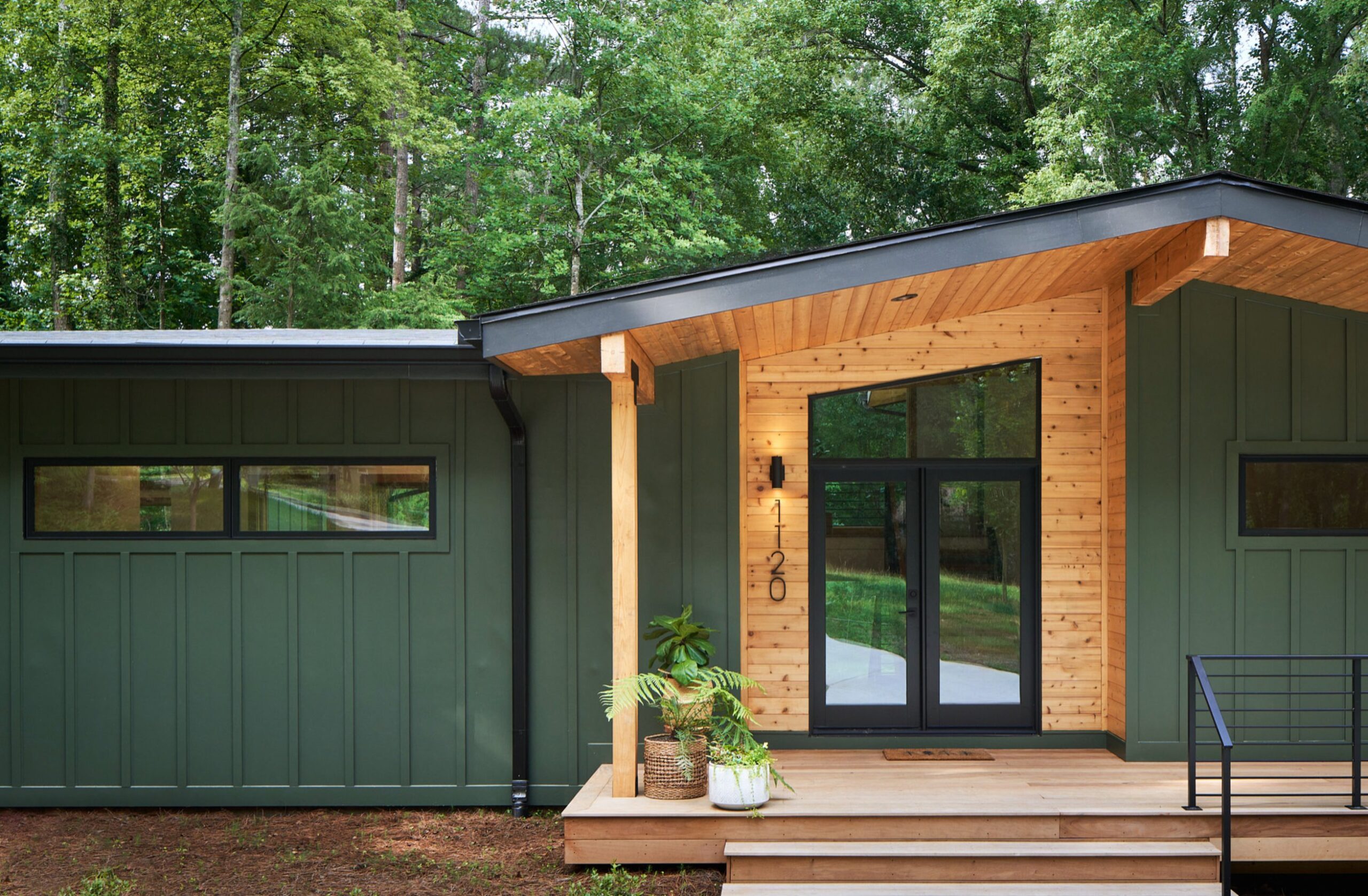
Vintage Vogue is a dark green to consider if black feels too stark and brown exteriors feel too expected. It gives the house depth while still showing color in daylight.
Sunlight brings out the green undertone, while evening light gives it a graphite cast. The yellow oxide in the mix, along with green and black pigments, helps keep the color from turning too sharp or cold.
13. Green Onyx by Sherwin Williams
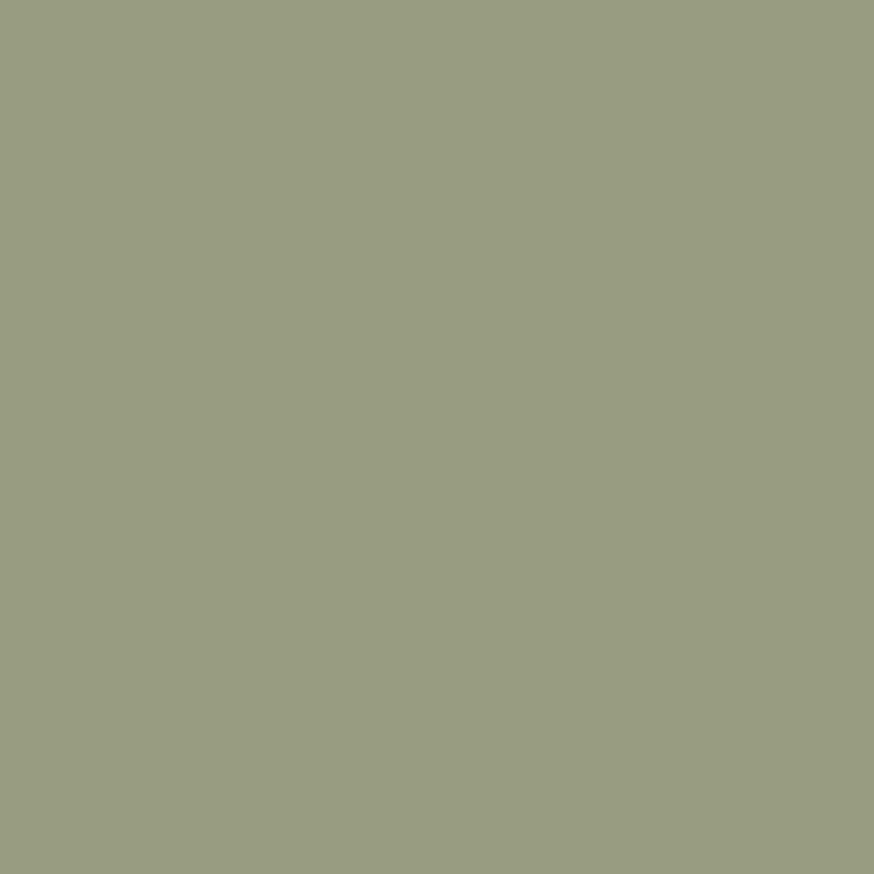
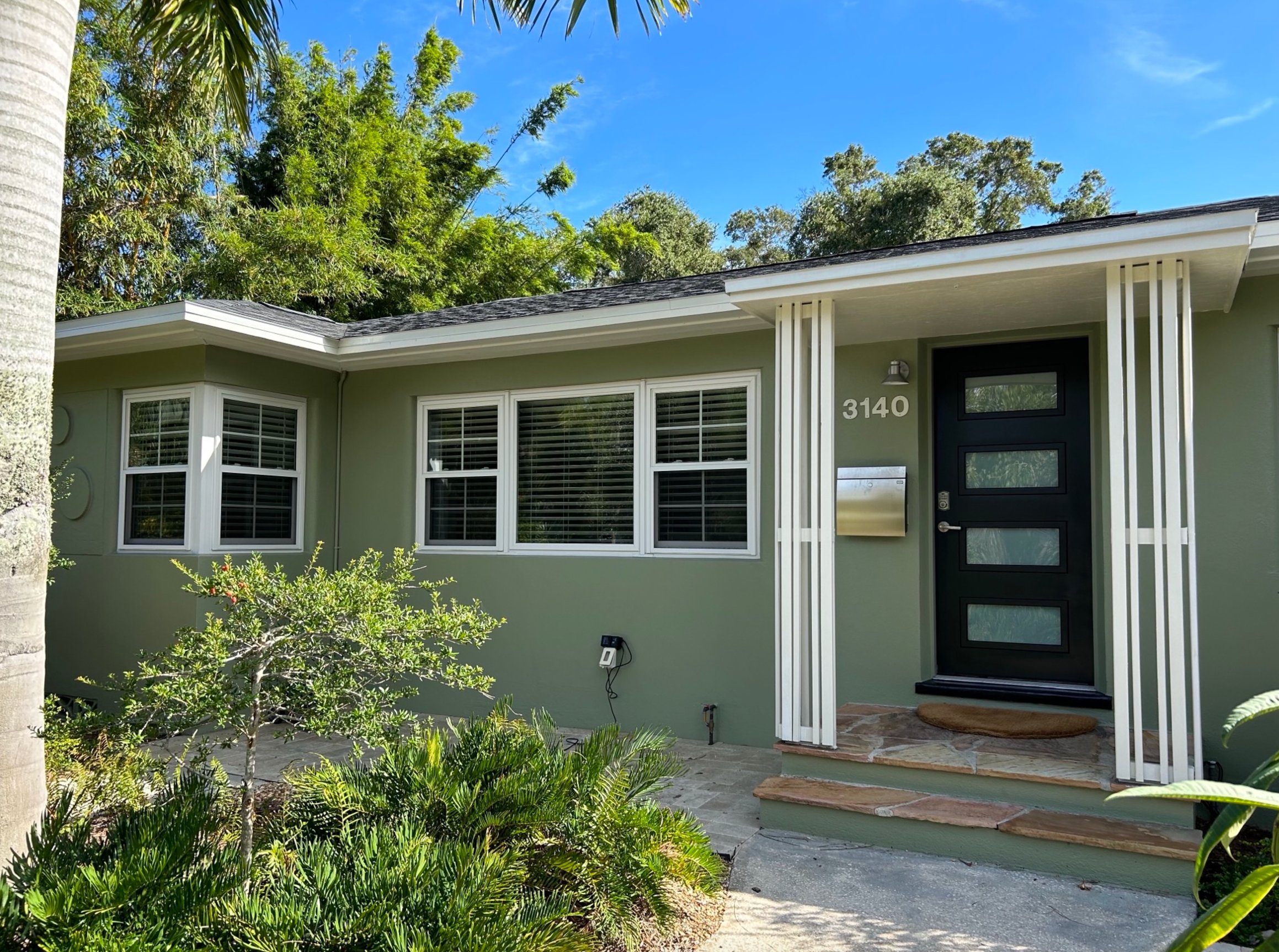
Green Onyx by Sherwin-Williams is a medium-toned muted green with an LRV of 31. It is warmer and more substantial than a typical sage, but it is not as moody as the near-black greens on this list.
You will see this kind of green a lot in Florida, where intense sun makes it look lighter. In cloudier regions, it keeps more of its warmth than many gray-greens, but it will read fuller and less breezy than it does in bright coastal light.
Surrounded by landscaping, Green Onyx settles in instead of competing with the yard. I would pair it with soft white trim, warm stone, or a natural wood door rather than a cold gray accent.

I'm Elizabeth, your go-to guide for all things paint and design! My days are filled with color swatches and innovative room makeovers. When I'm not painting the town - literally - I'm soaking up inspiration from my travels. This blog is my way of sharing my passion and making the world a more vibrant place, one color palette at a time.